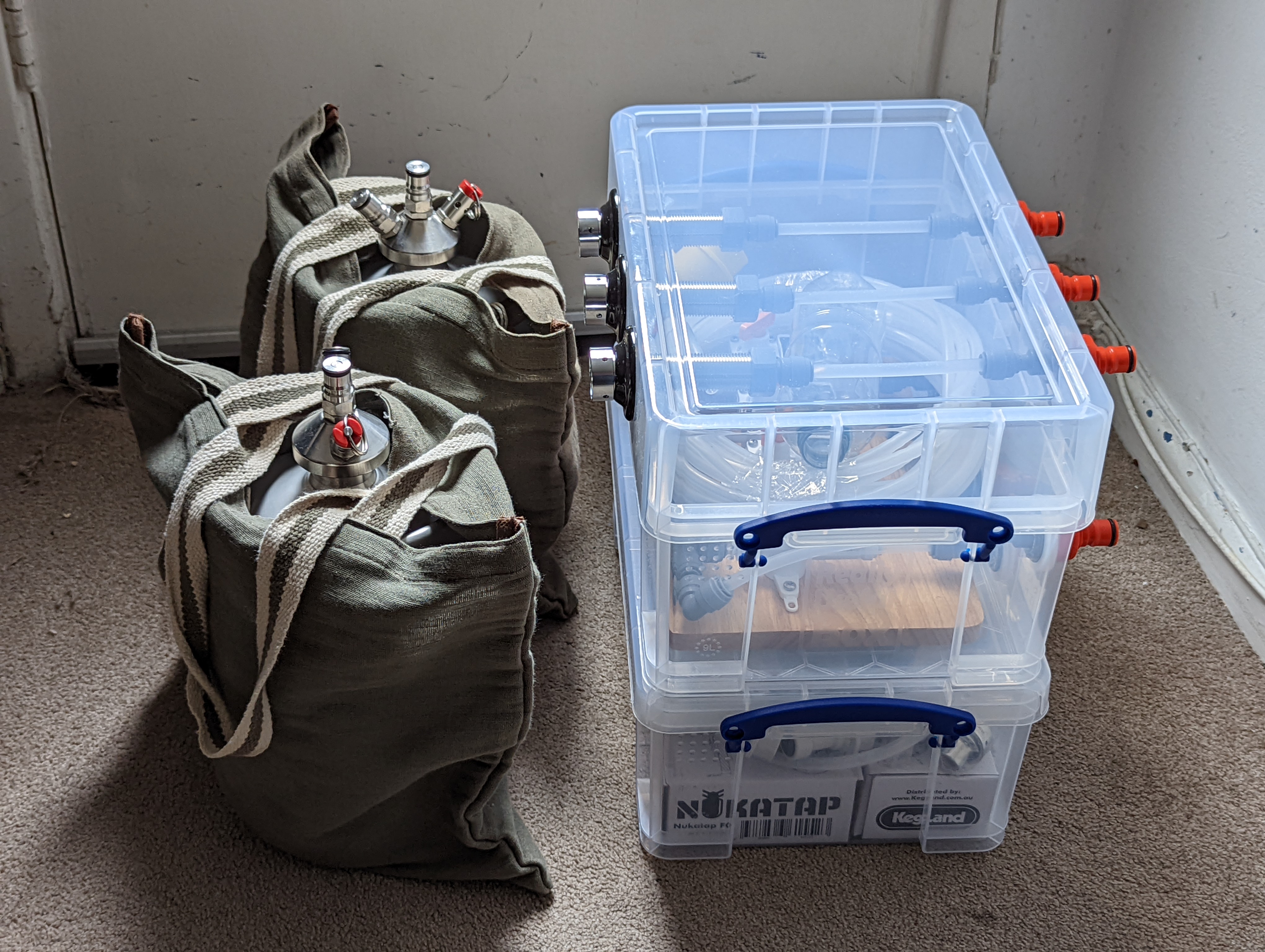
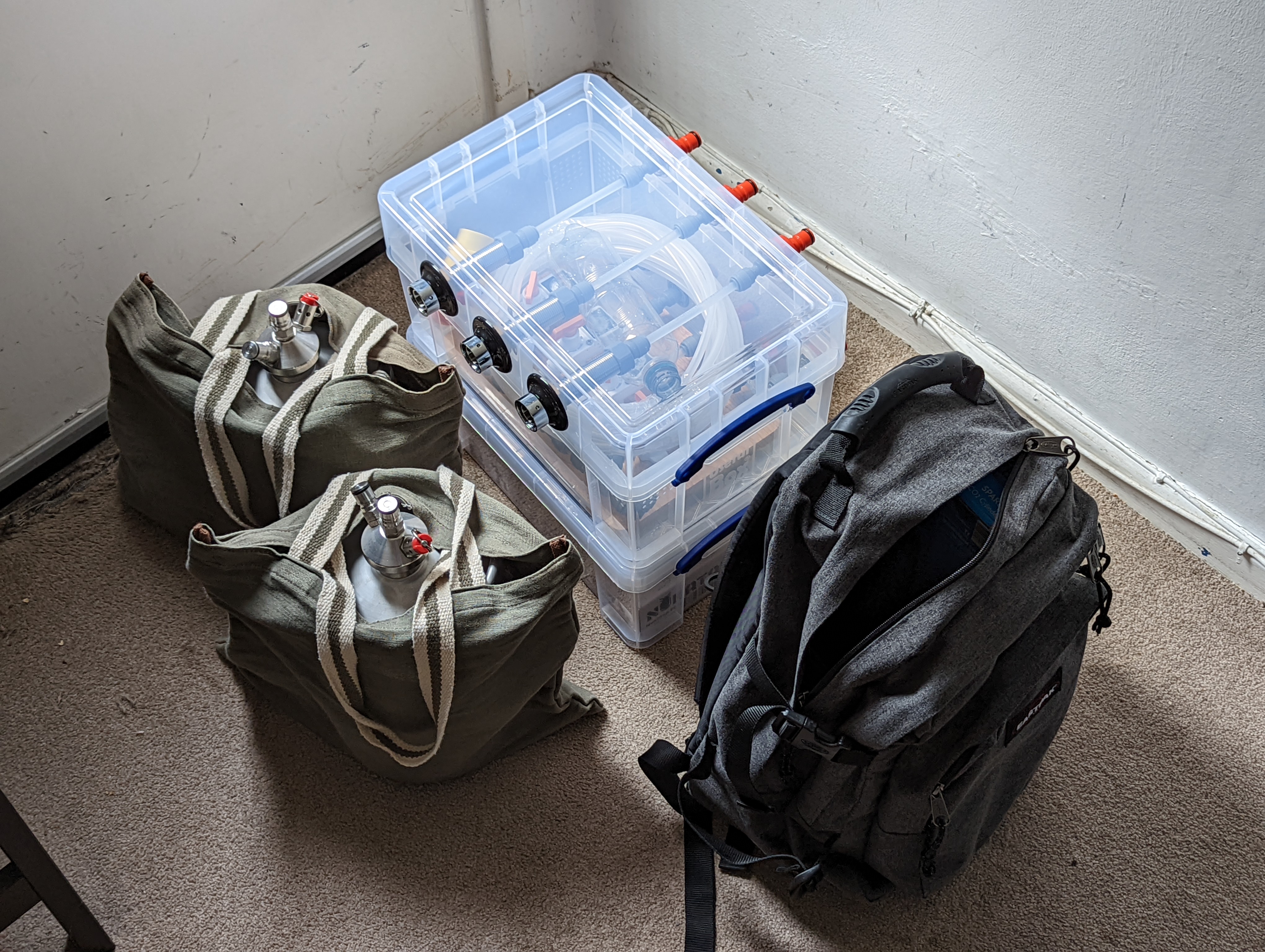
The portable bar
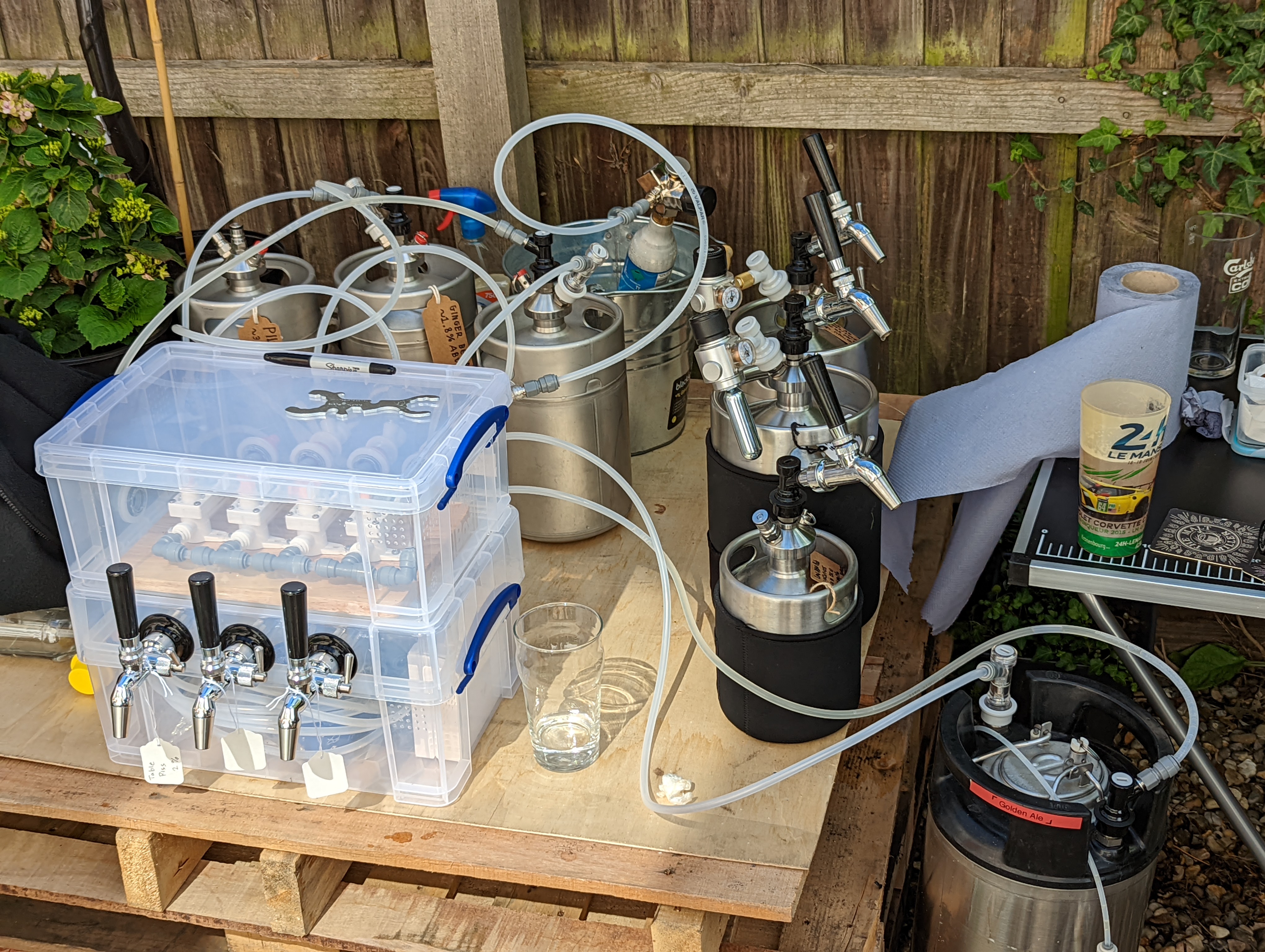
A short while ago I built this thing: a portable bar.
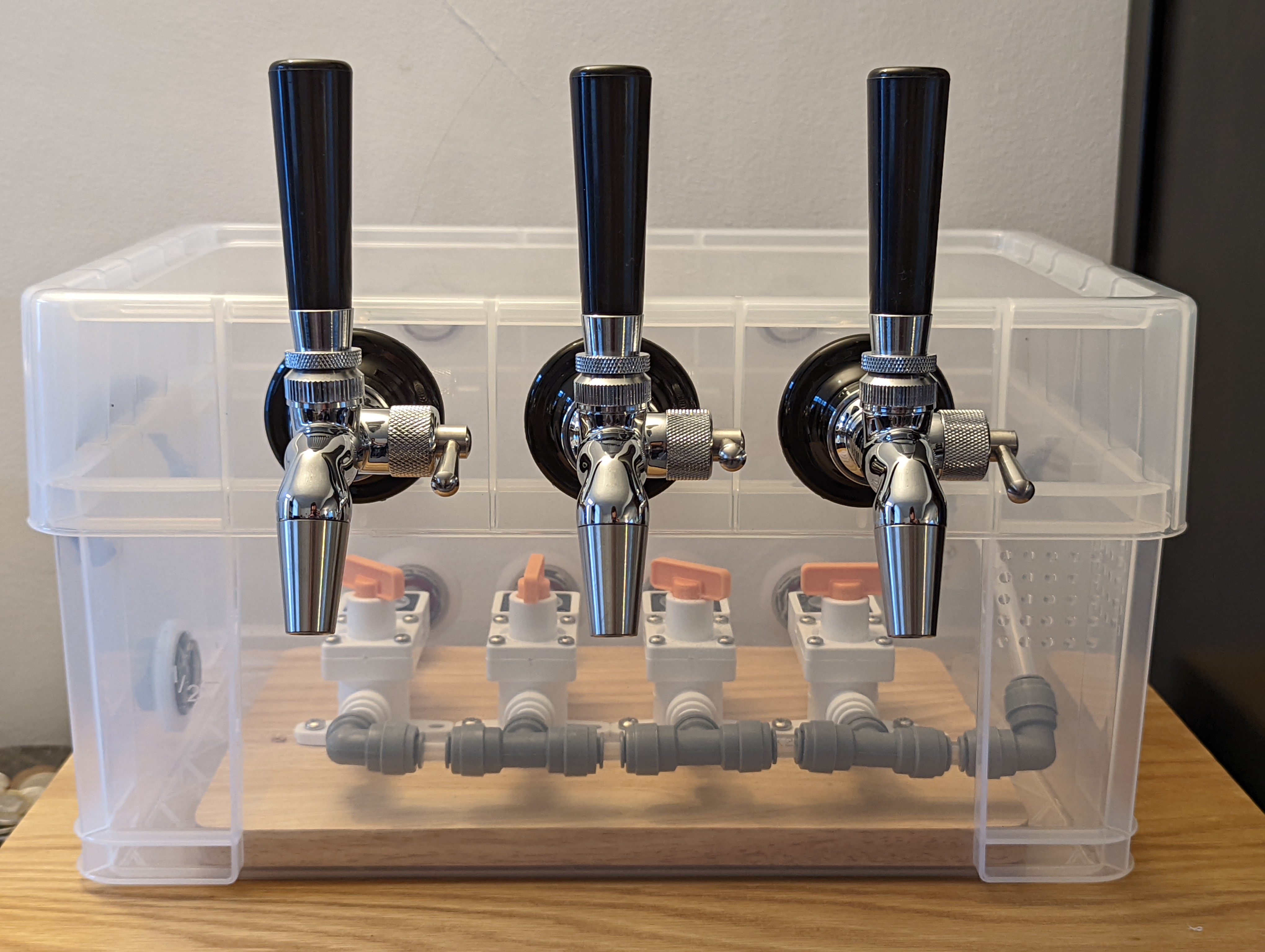
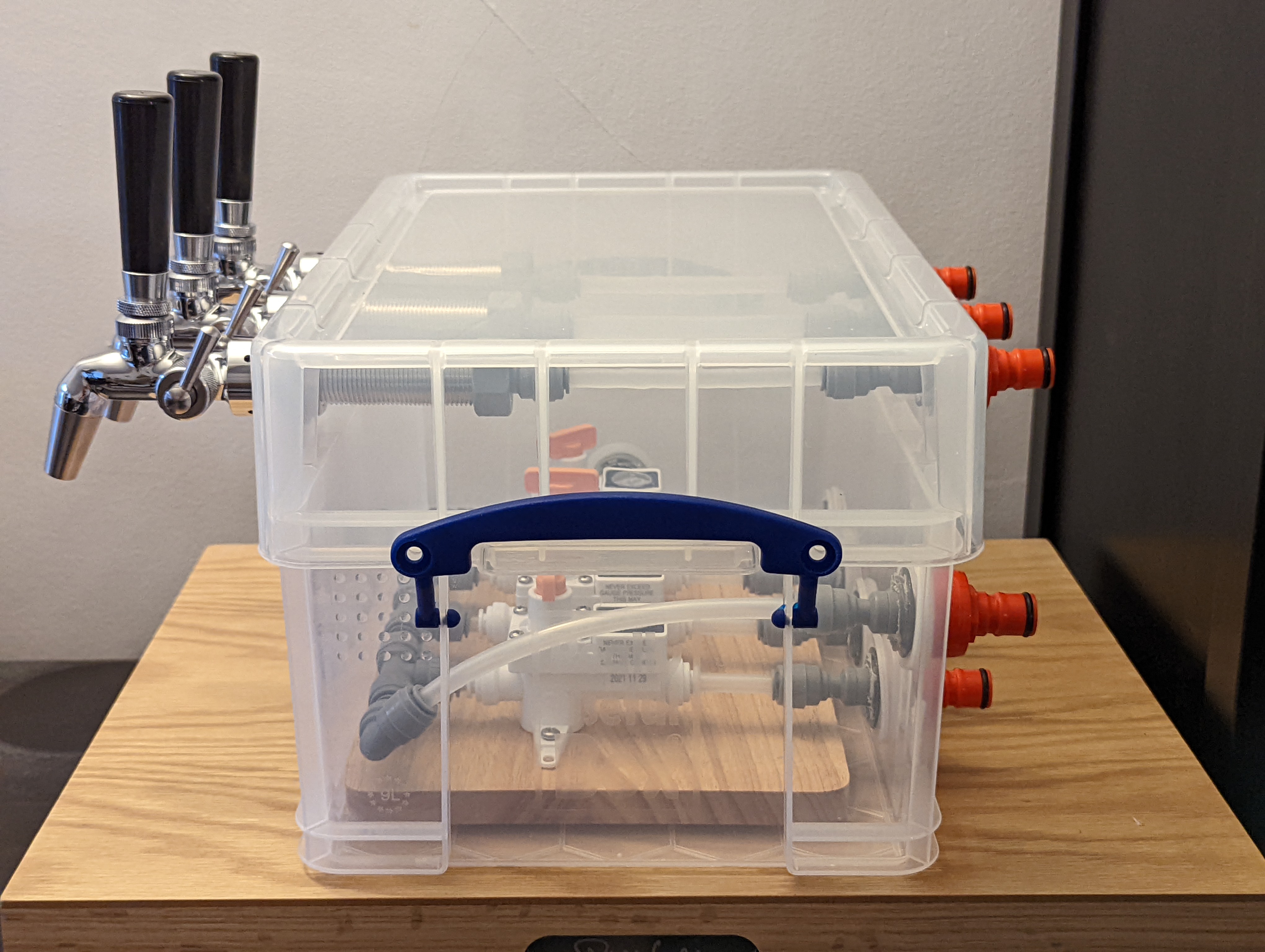
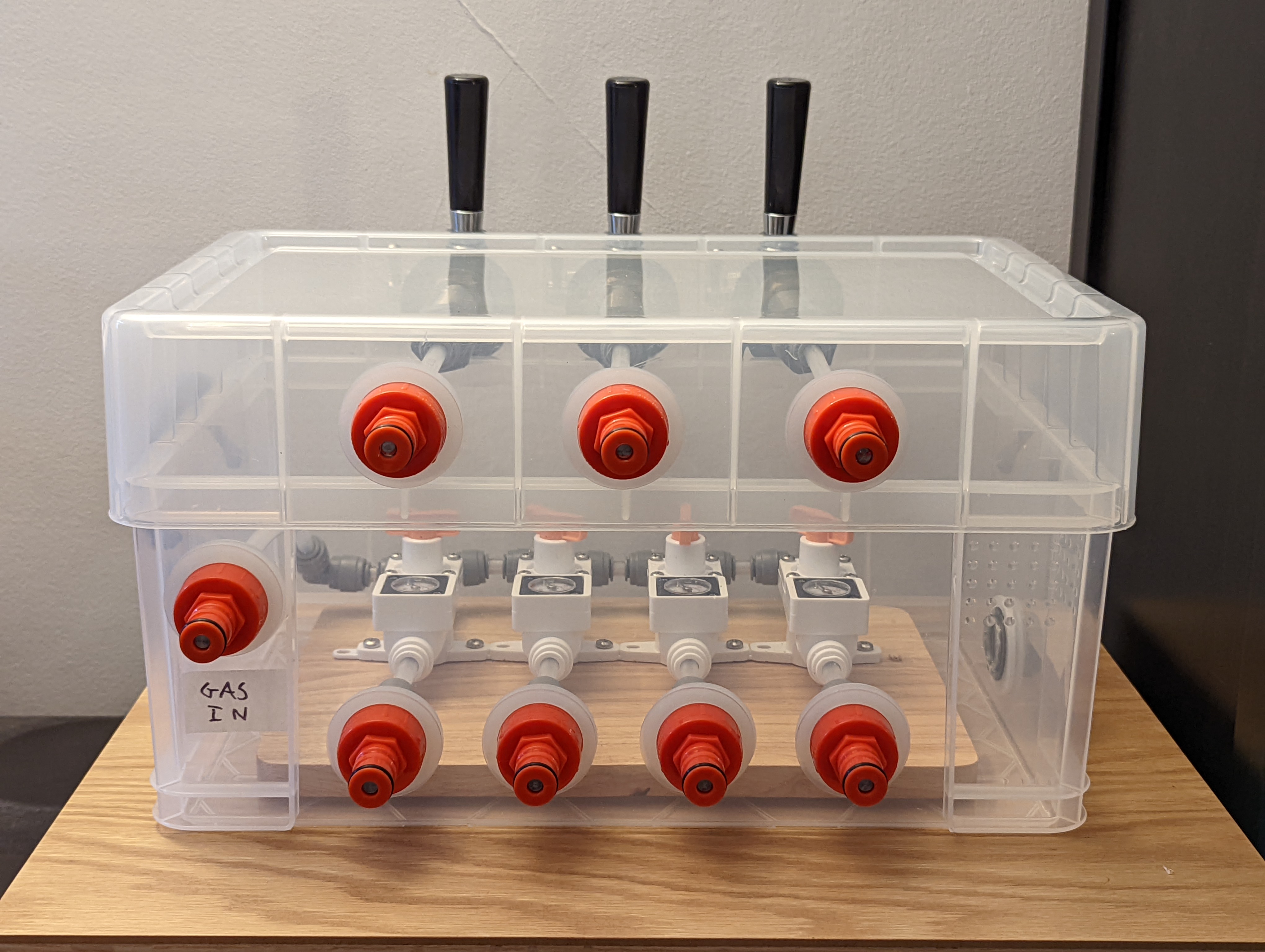
The top box has three flow-control taps and the bottom box provides four lines of independently-regulated CO2 from a primary CO2 source.
Almost of the external parts (taps, connectors, tubing, tools, primary regulator) can be stowed within the boxes when not in use, leaving only the keg posts and tap shanks sticking out of the boxes during storage and transport.
Making the regulator box
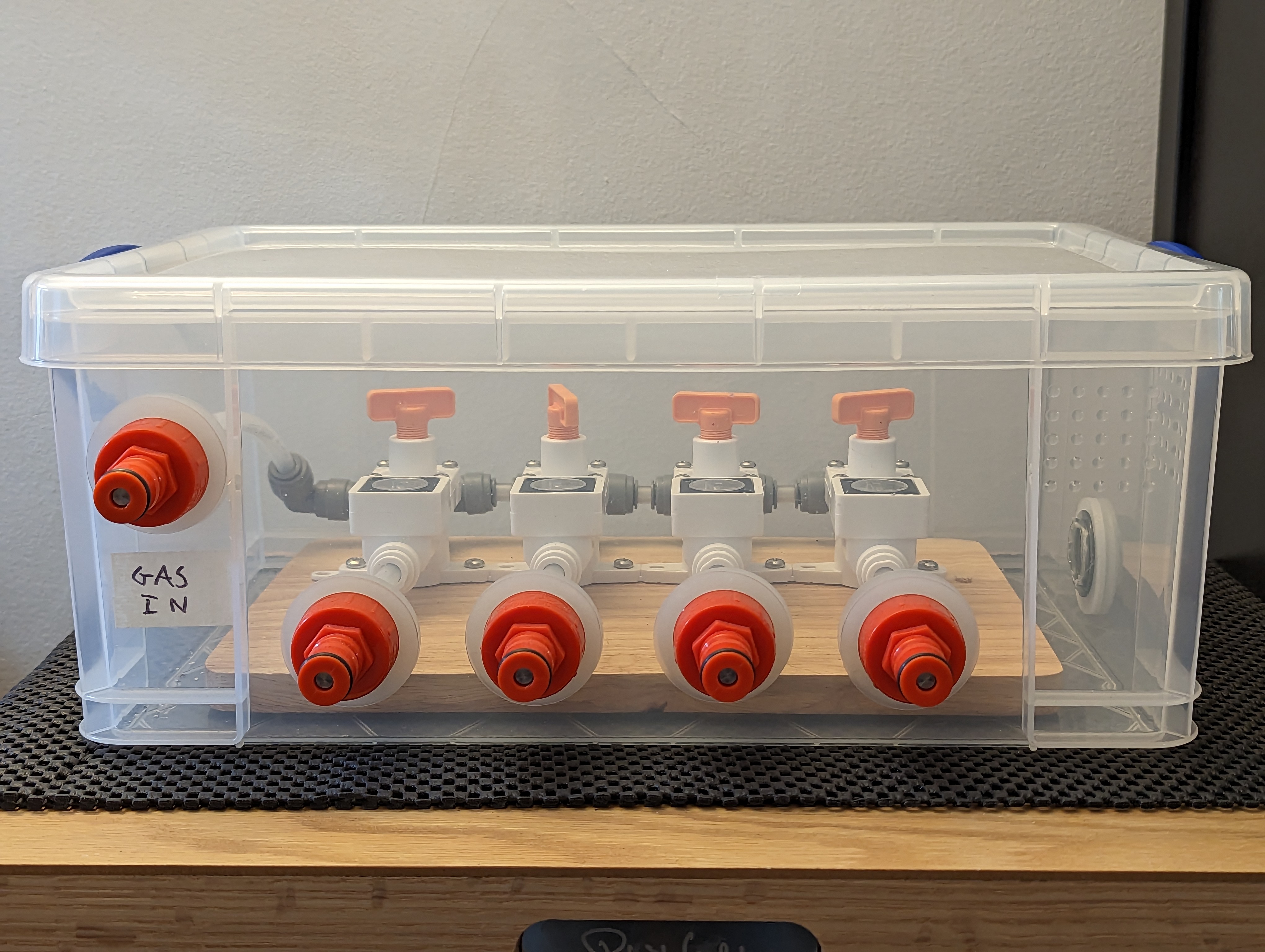
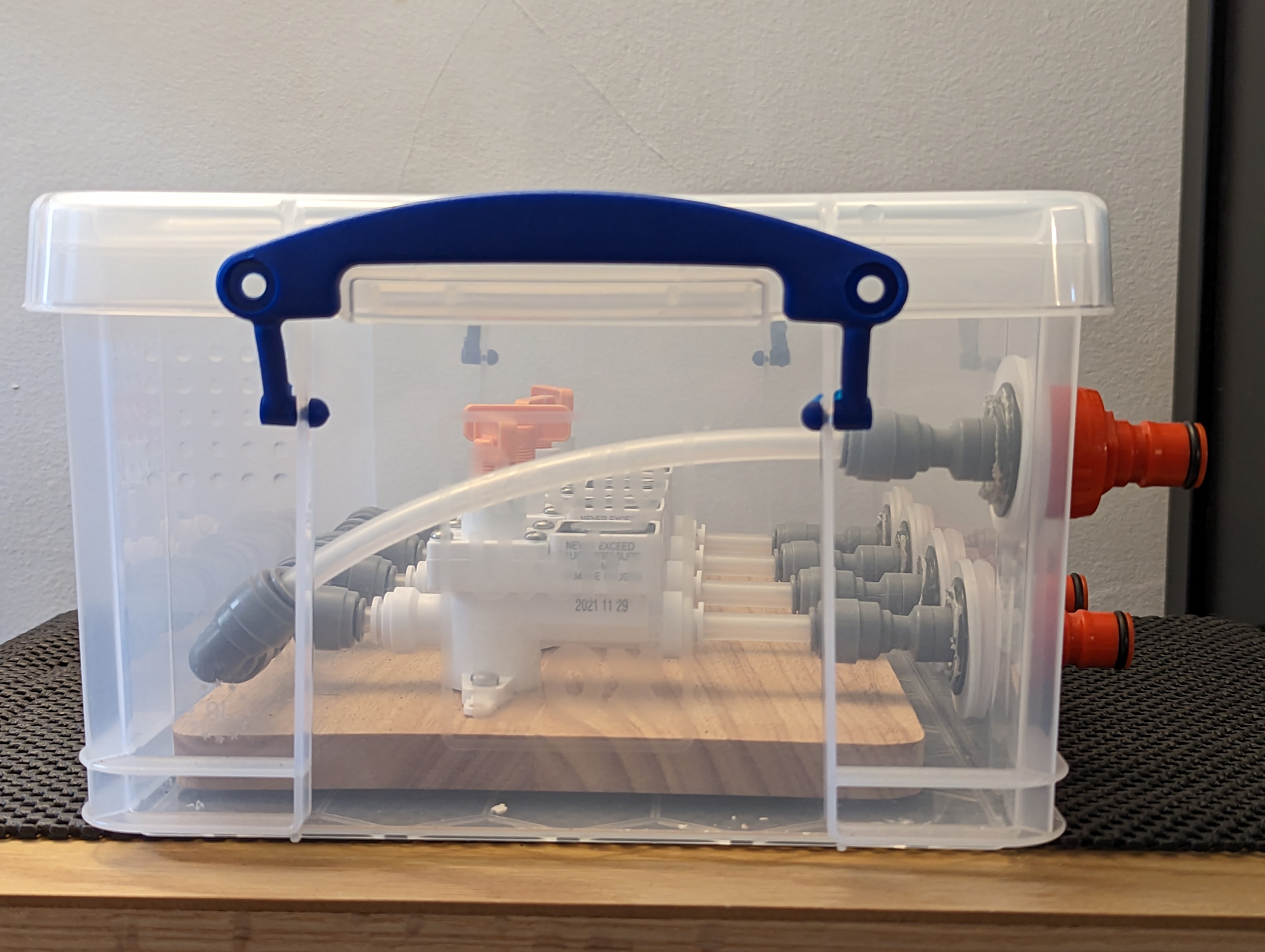
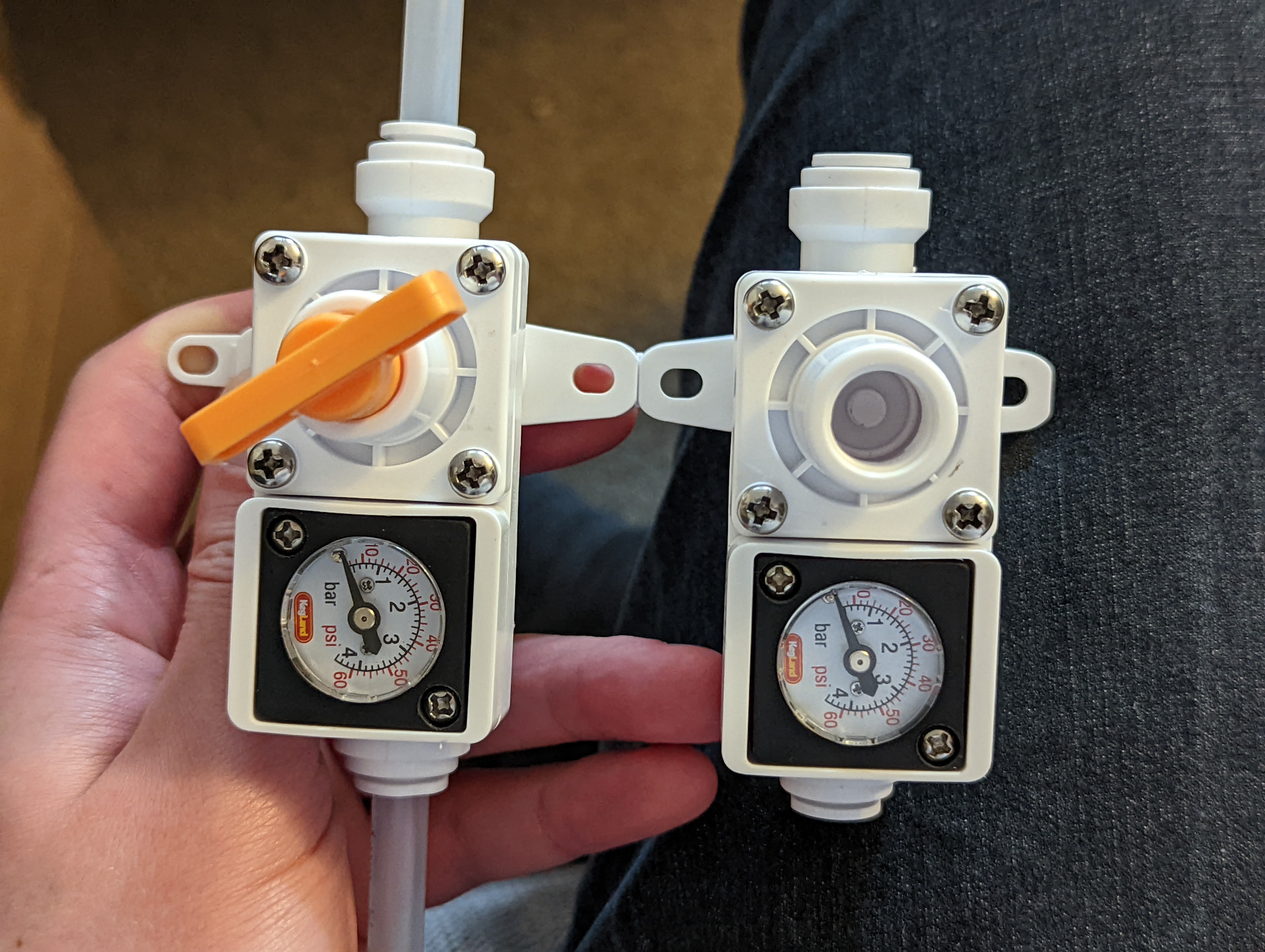
The CO2 regulator box has four Kegland secondary CO2 regulators connected to carbonation caps on one side of a Really Useful 9L box using some 5/16" tubing and Duotight fittings. There's a bonus port on one side which is currently useless.
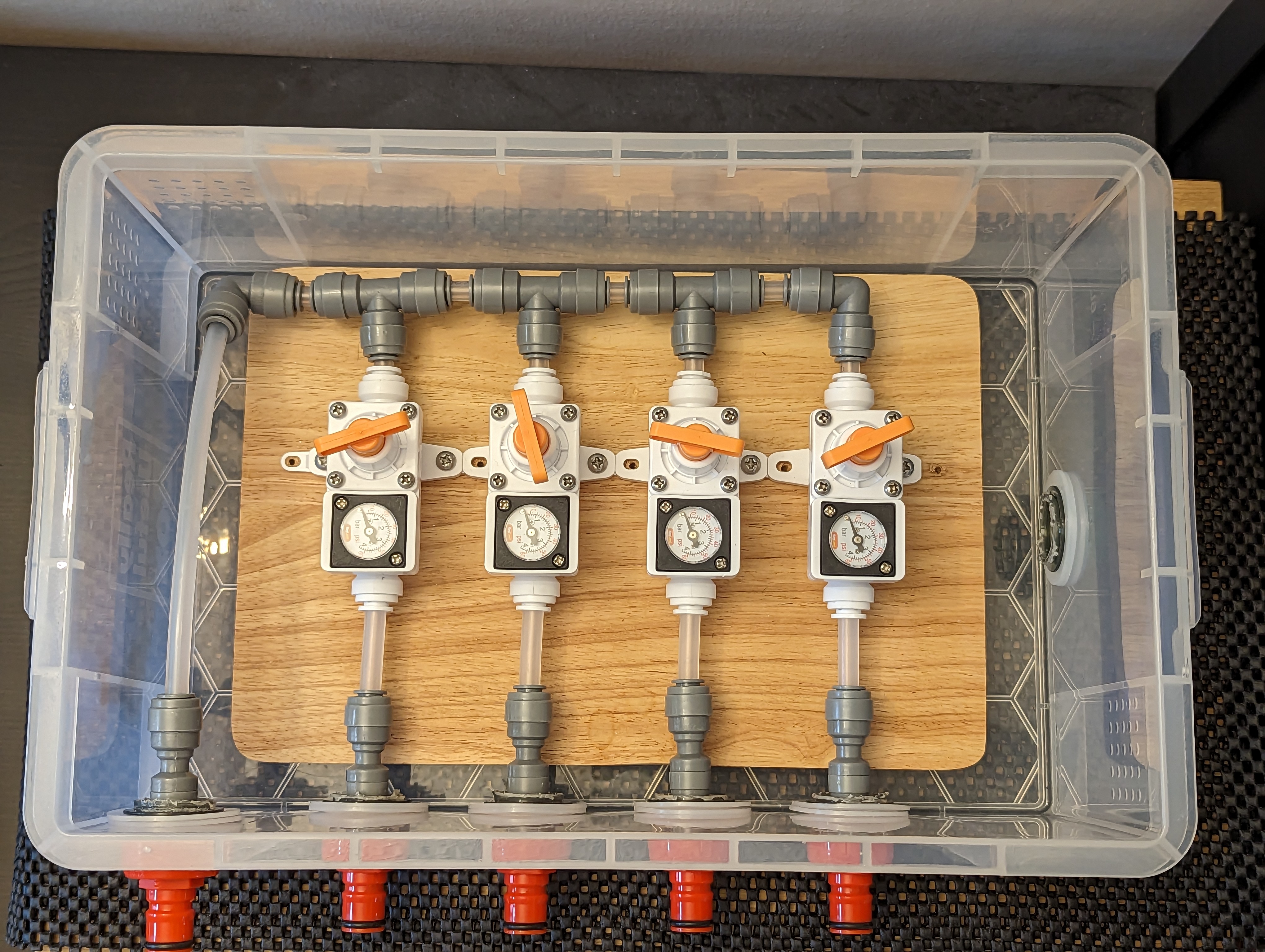
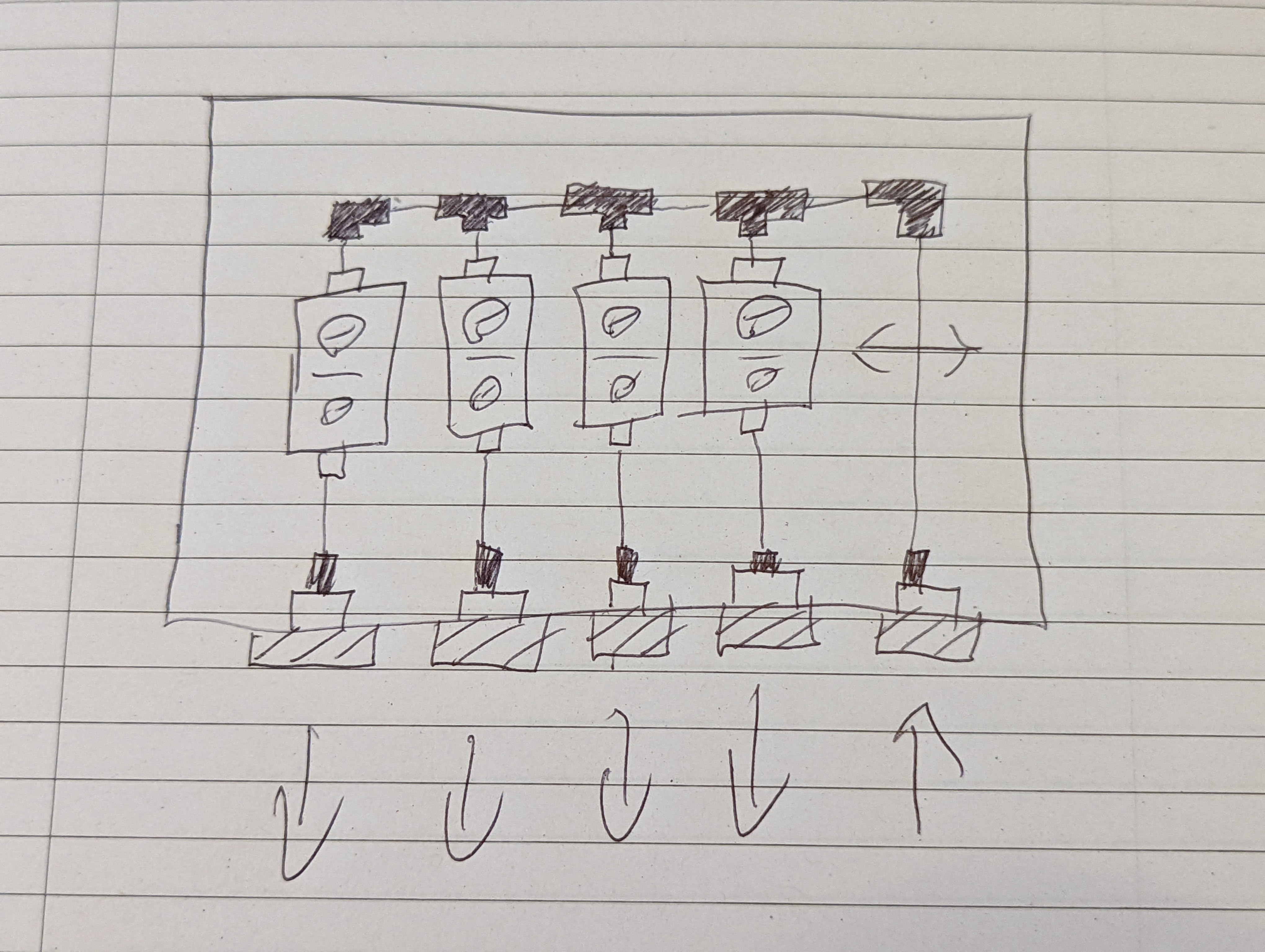
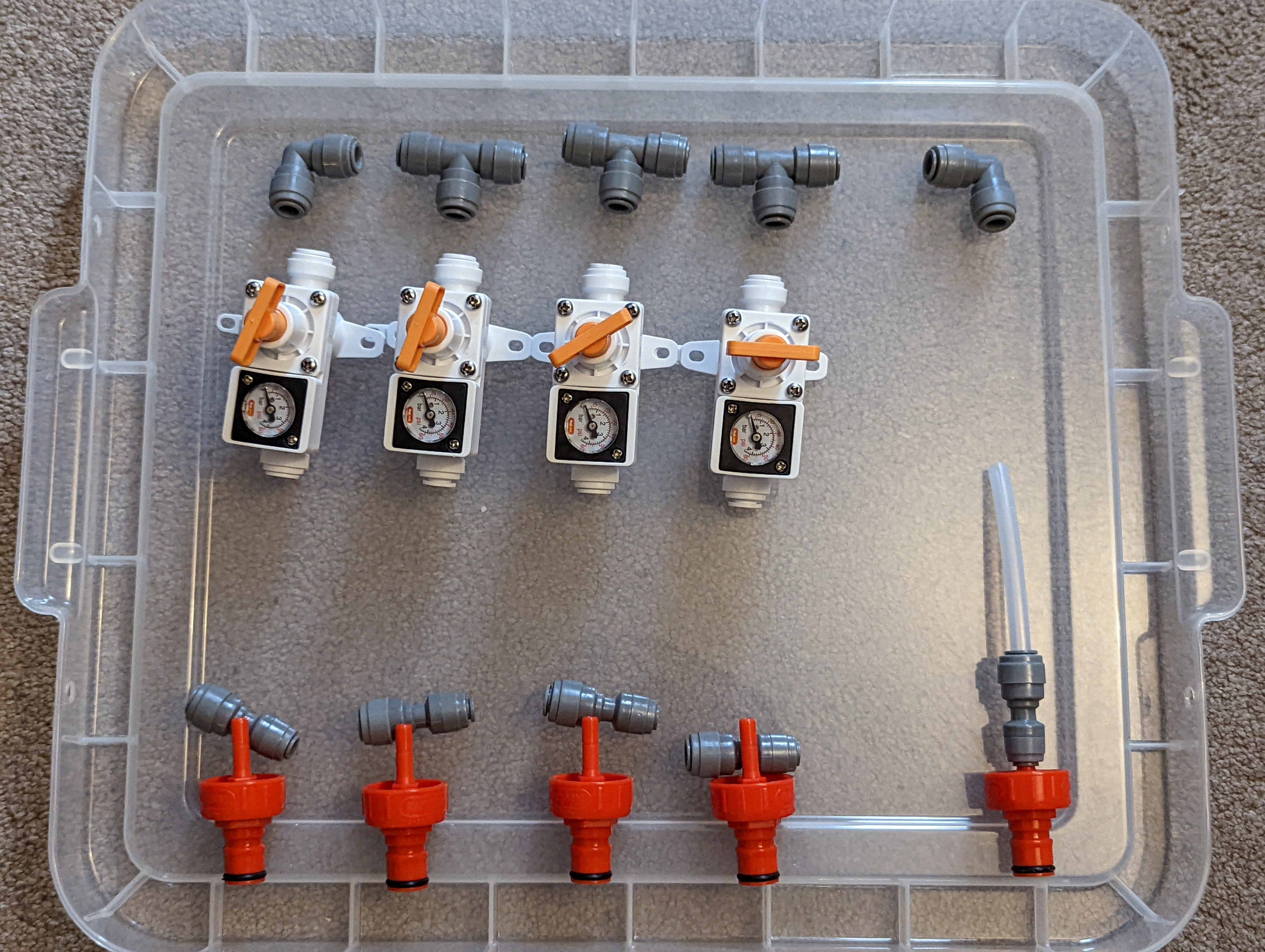
I first made a rough sketch of how I wanted the regulators arranged, along with the various parts that would be necessary:
The regulators are designed to be attached with screws, with a small overlapping tab to hold each regulator to its neighbour. I couldn't find the dimensions listed anywhere, so measured one with a ruler and sketched out the dimensions on paper:
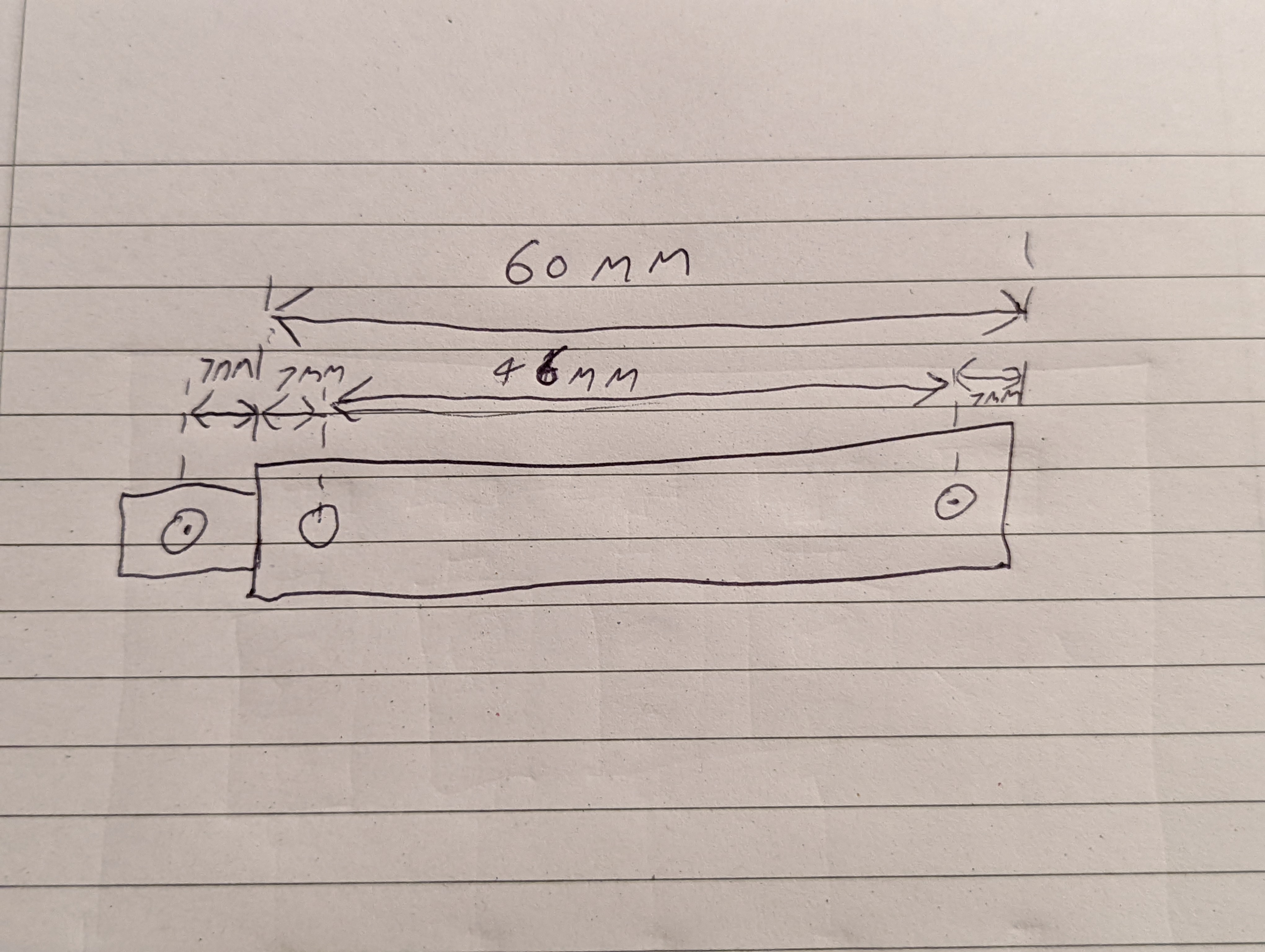
With the dimensions in hand, I marked the screw hole positions on a chopping board, made some pilot holes for each of the screws, then fitted the regulators, which looked great:
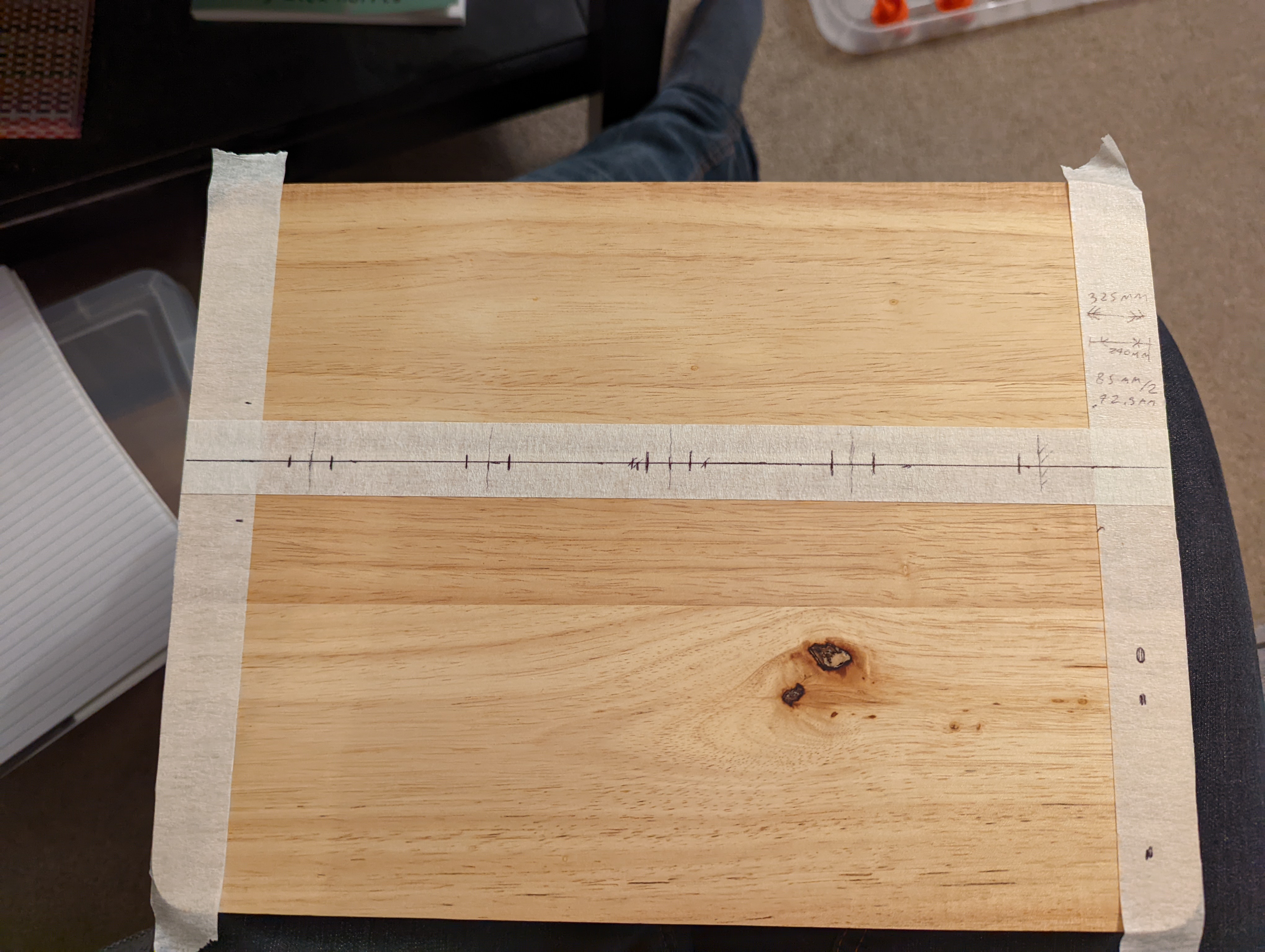
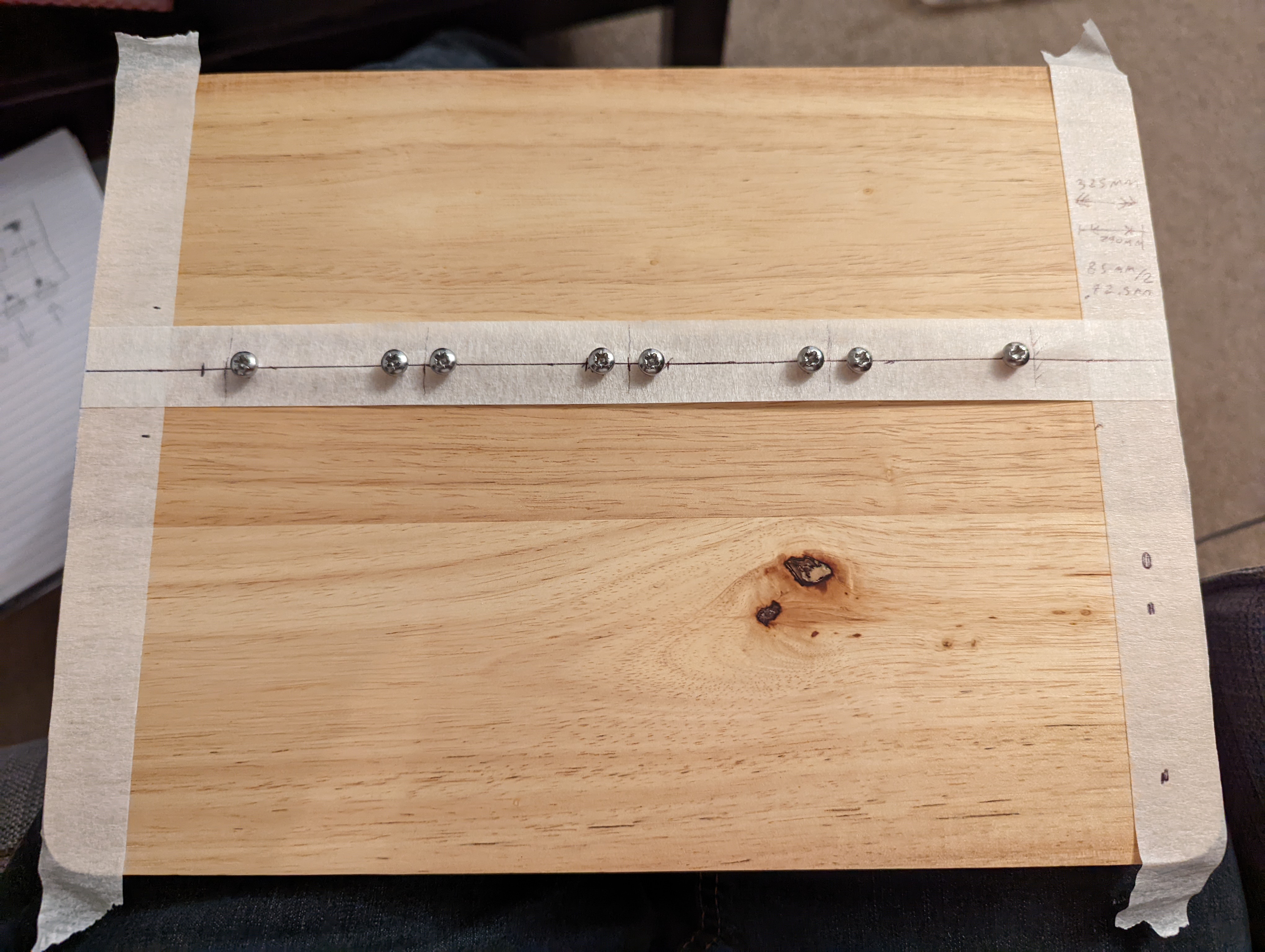
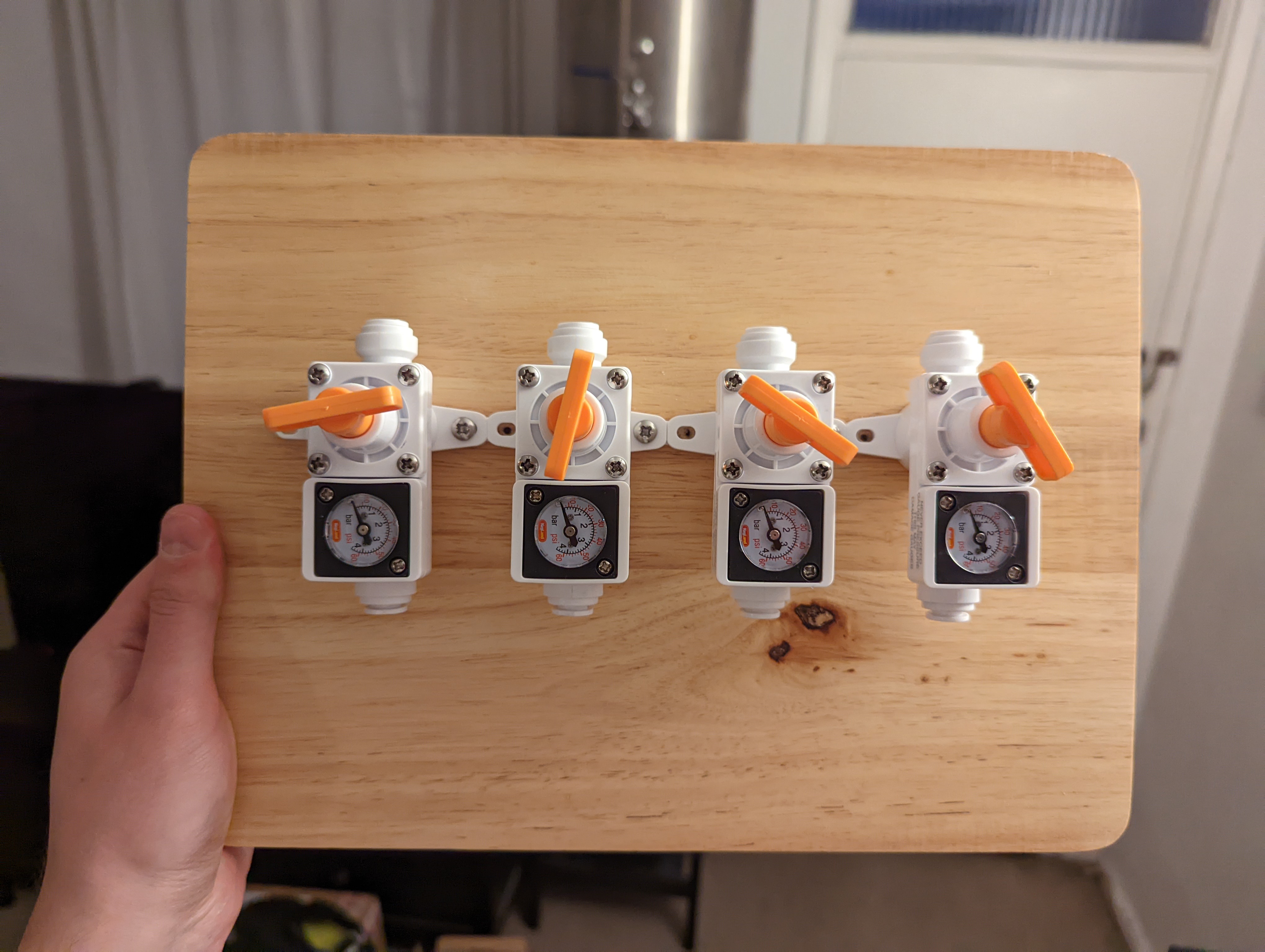
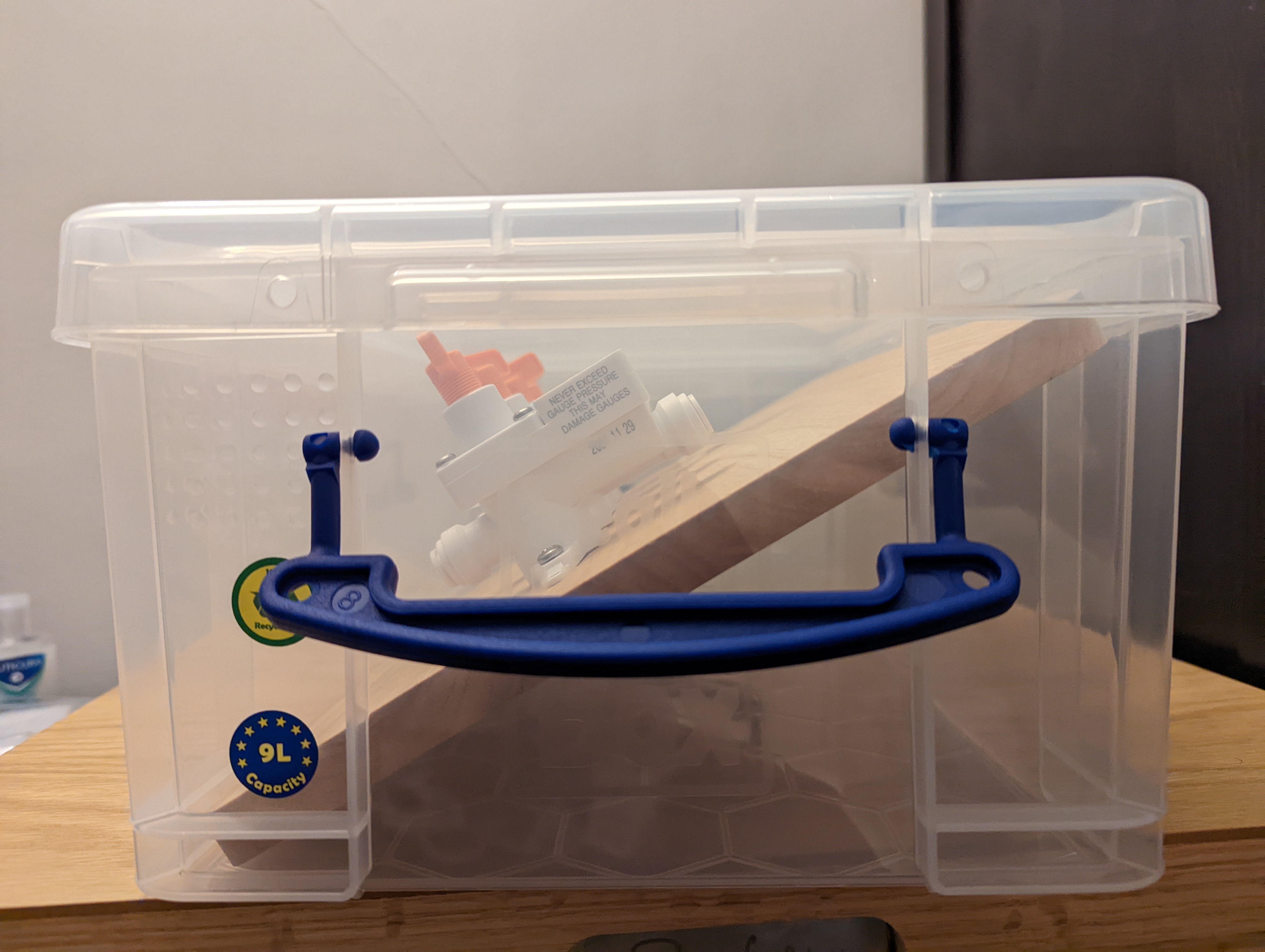
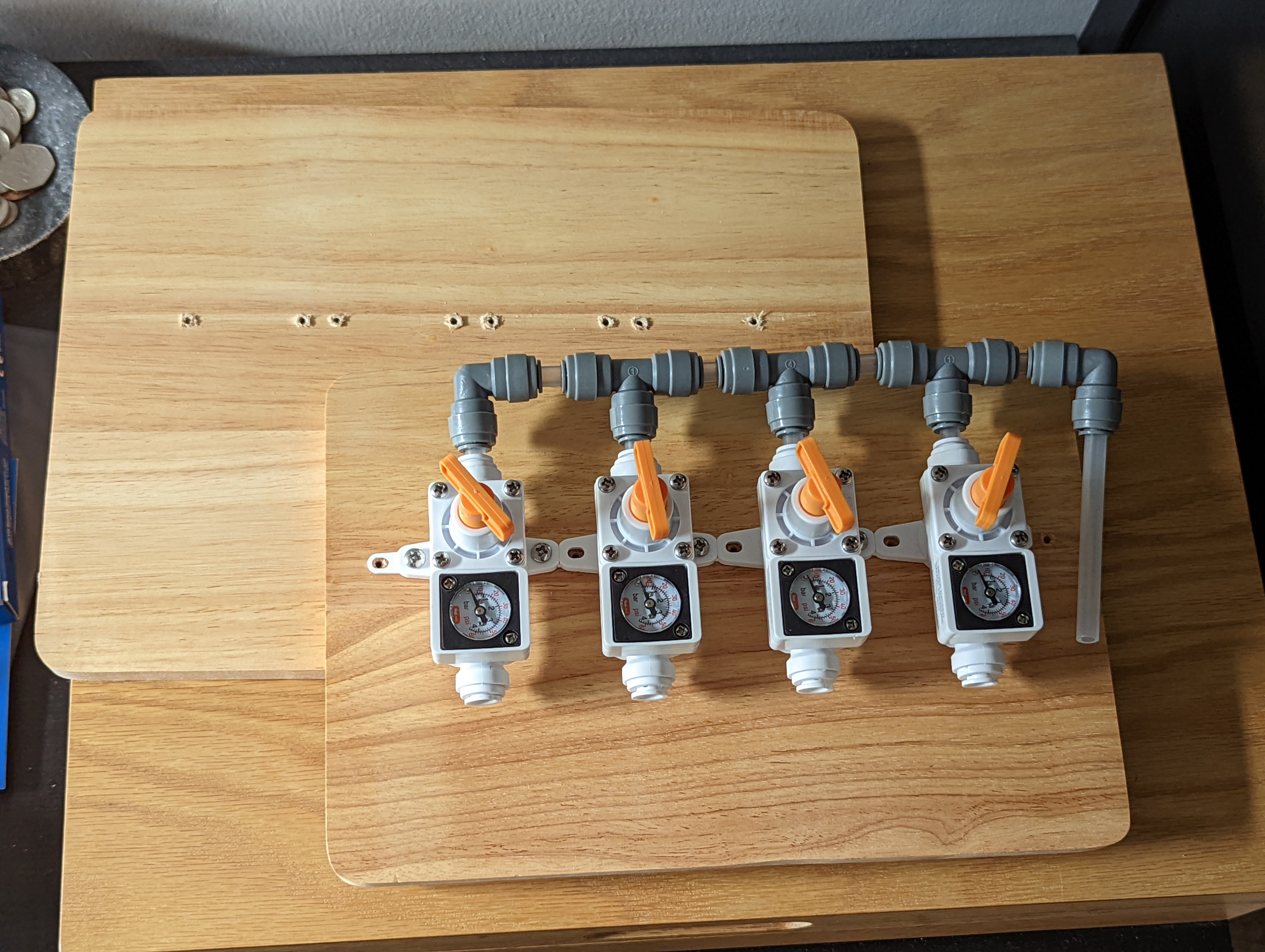
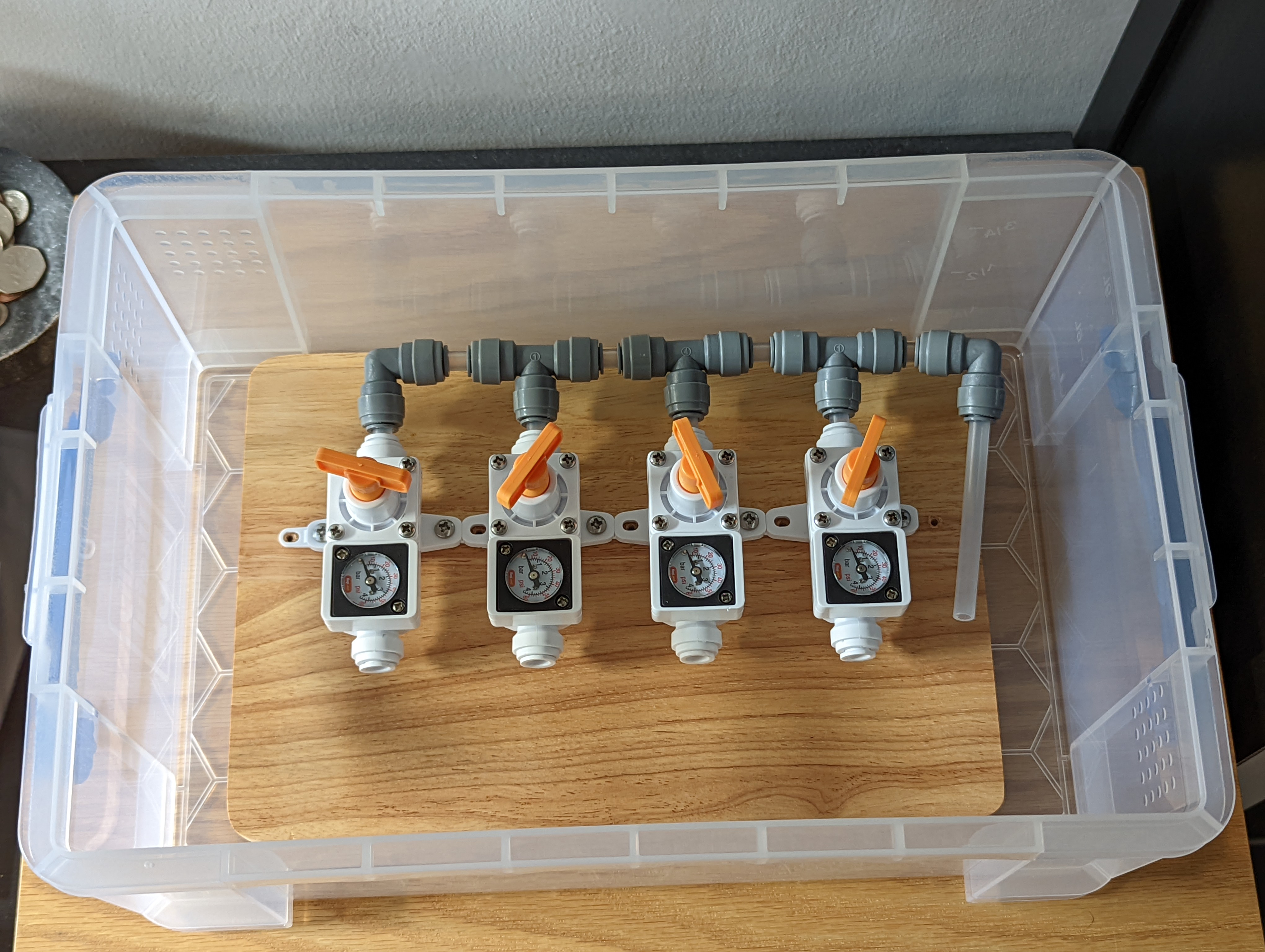
At this point I realised the board I had used was too big for the box. I found a smaller board and repeated the process, migrating the regulators over, and fixing the board to the bottom of the box with some double-sided tape:
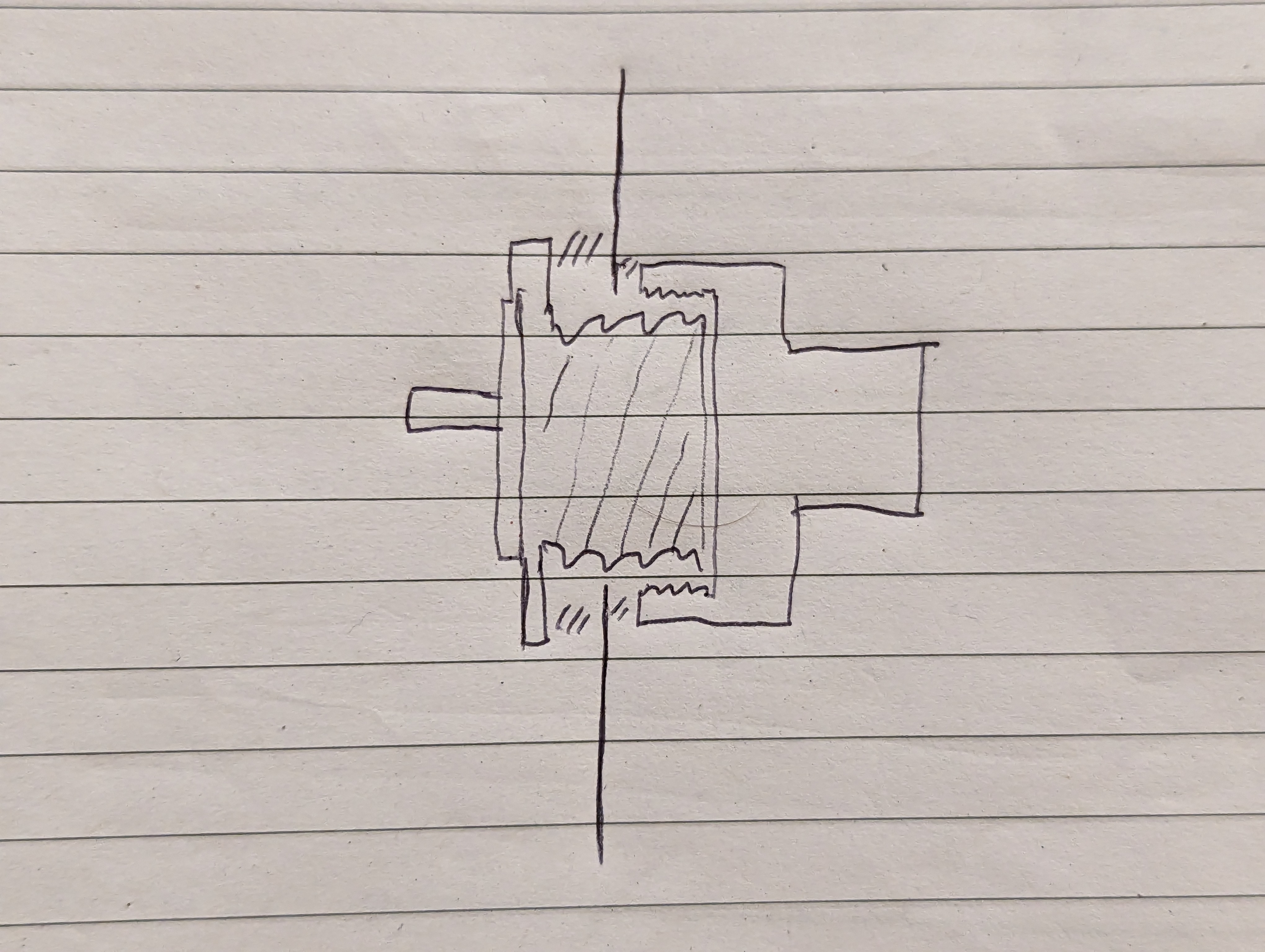
One end of each carbonation cap is a standard corny keg post and the other end is a standard PCO 1881 bottle cap with an internal 1/4" barb. The 1/4" barb will be connected to the gas lines with a 5/16" to 1/4" reducer, and while the PCO 1881 part needs to hold the post firmly in place it doesn't need to be airtight for this design.
I couldn't find any PCO 1881 bulkheads, so I used a Dremel tool to cut the necks off of a few drinks bottles. I hoped the flange of the neck would seal against the inside of the box, and the rim of the cap would seal against the outside, but once assembled it was clear there there was a fair amount of wiggle-room that I'd have to account for later:
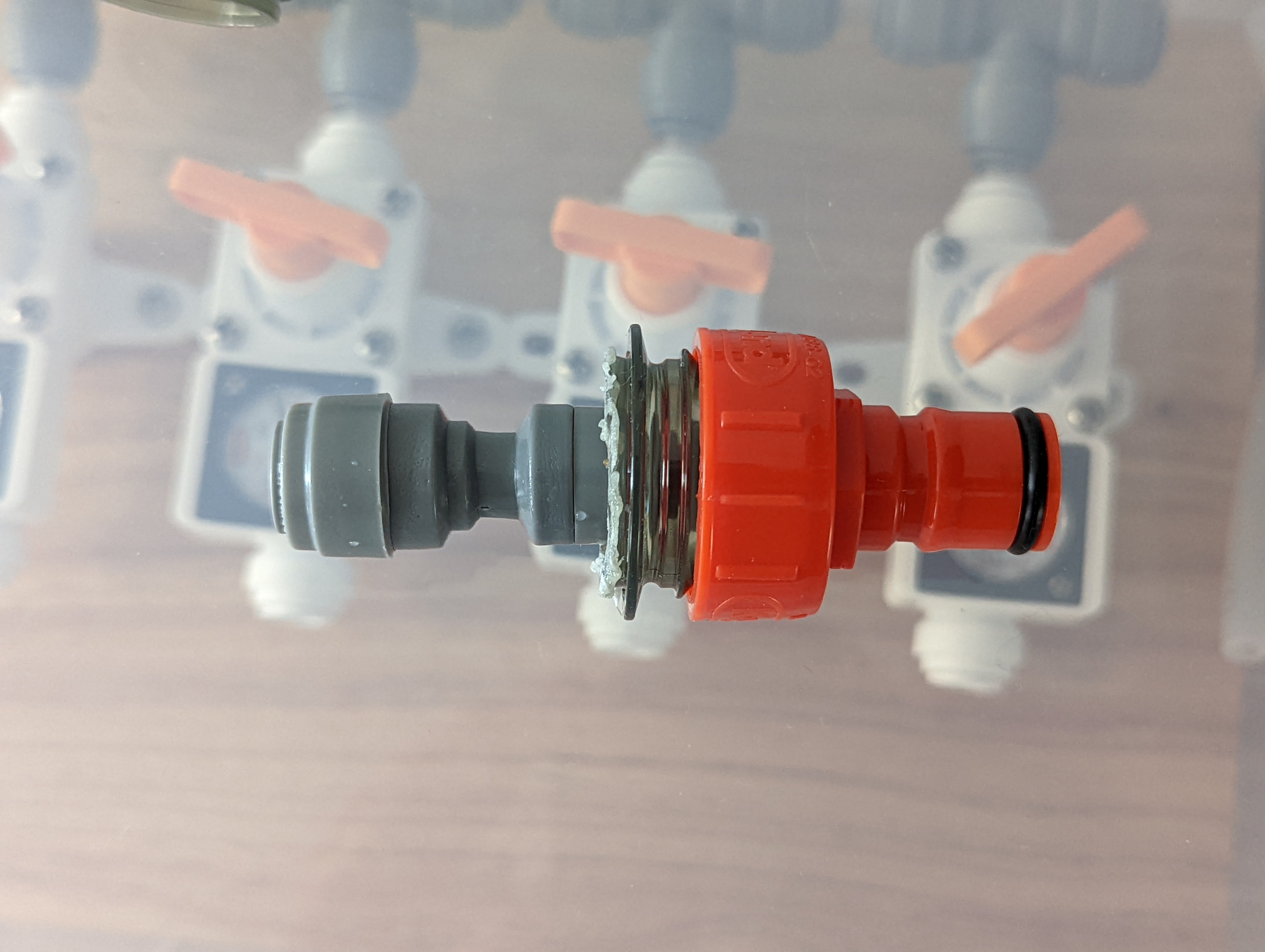
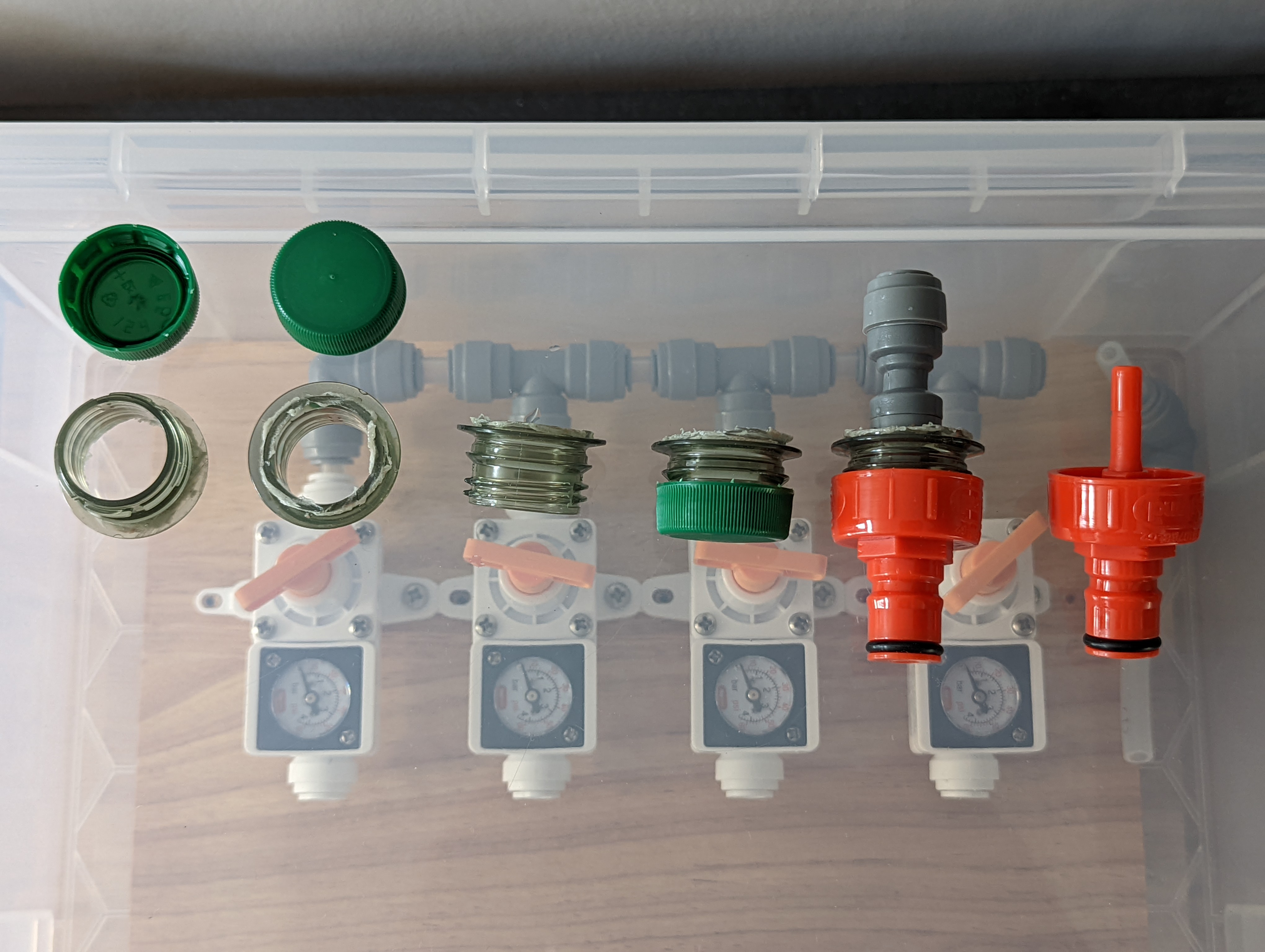
I sketched out where I would need to make holes on the box. I made a few measurements to account for the height of the regulator and the board, the diameter of the PCO 1881 thread, and the tampered sides and supporting ridges of the box. I marked the centre of each hole and poked those through with a pin. At this point I thought the best placement for the gas in line was the side of the box, so I marked that up in the same way:
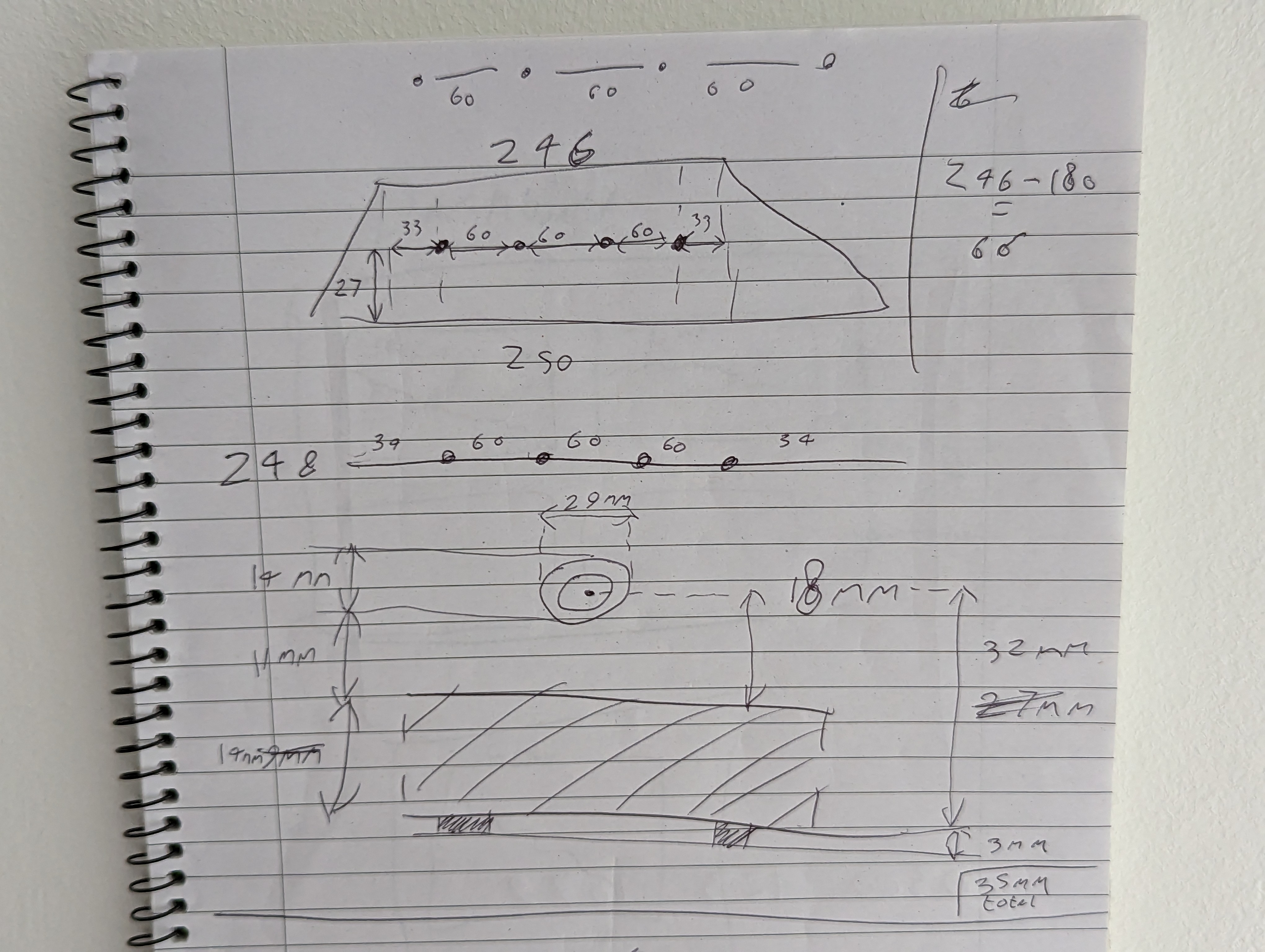
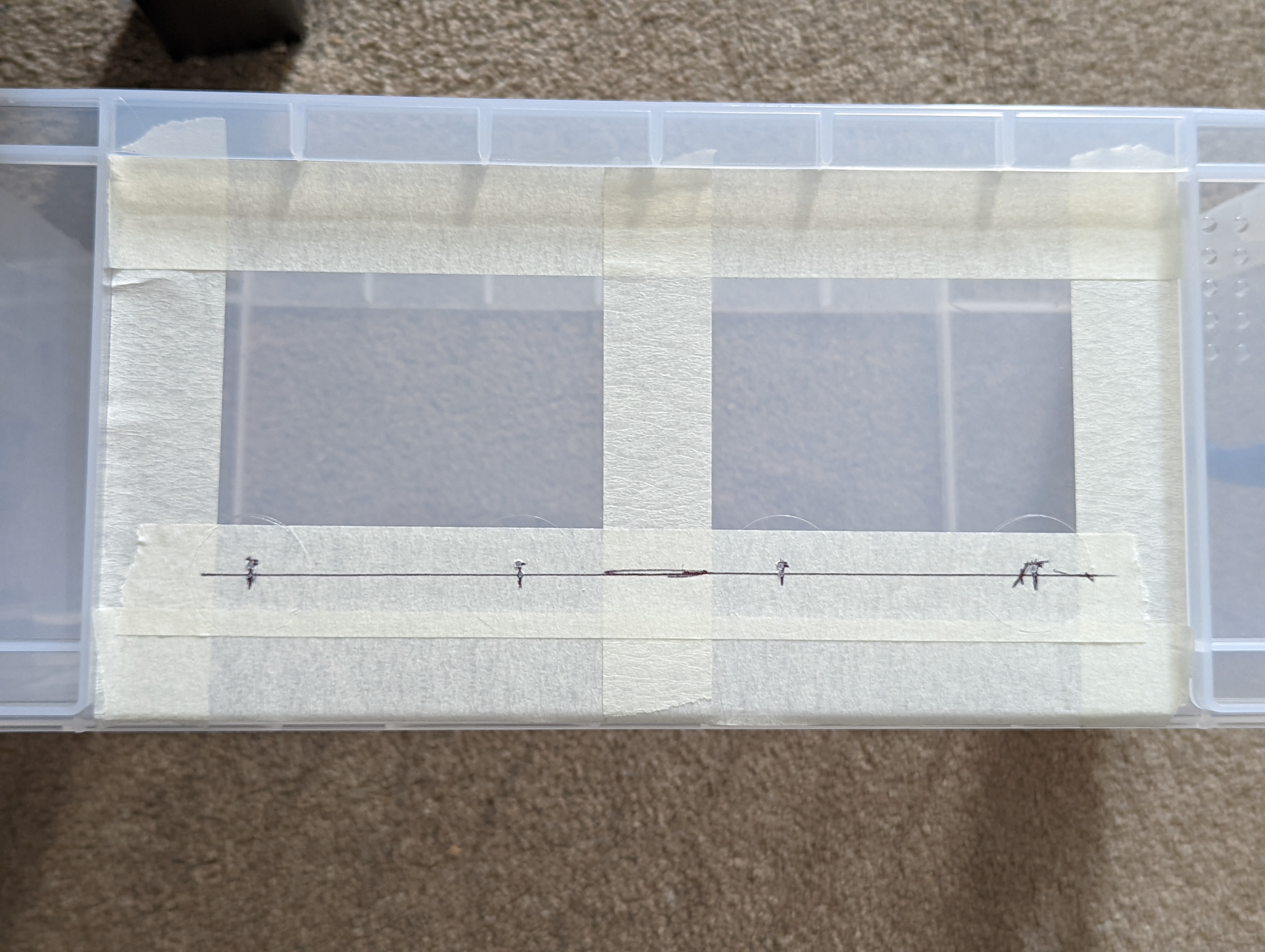
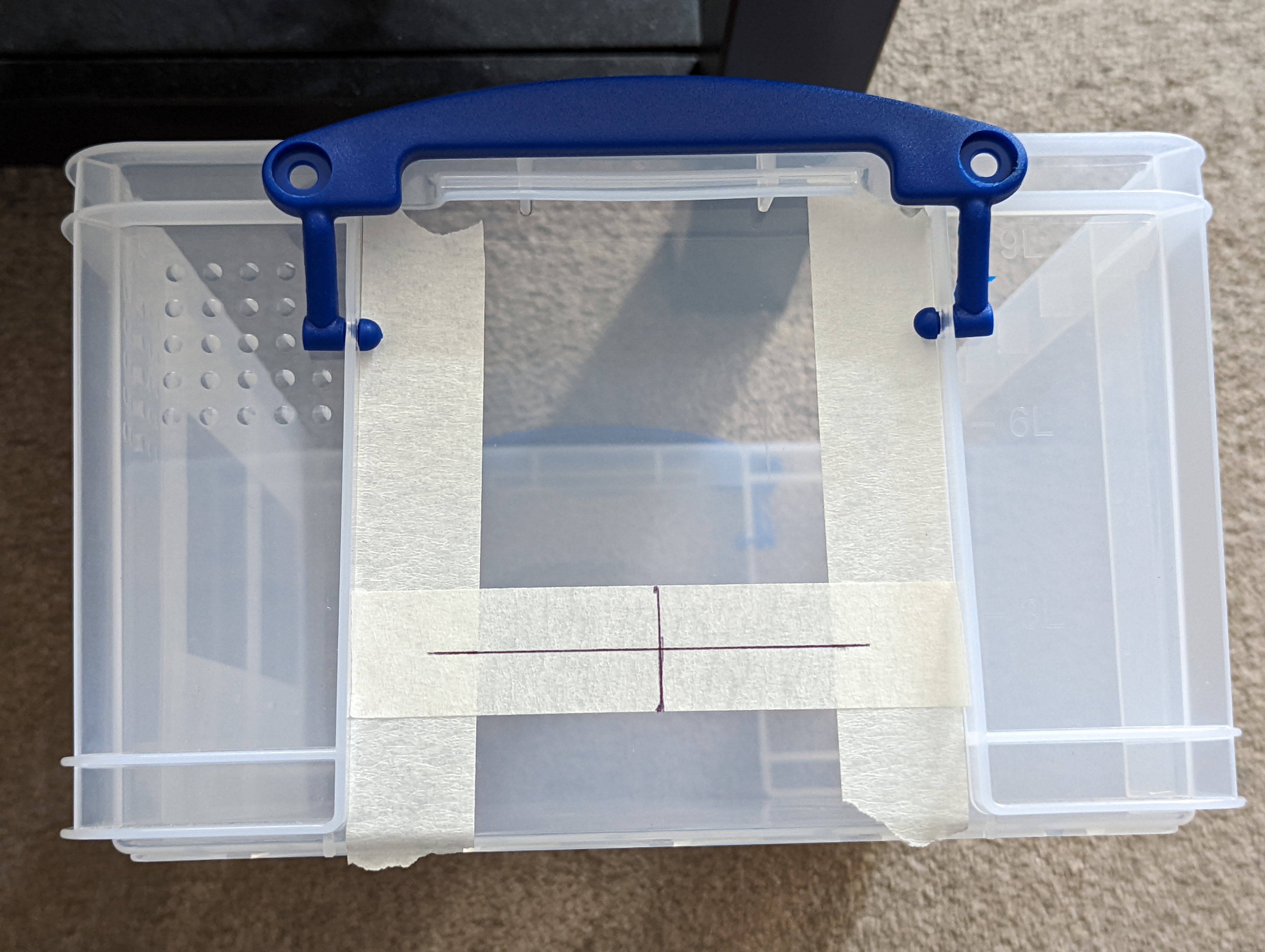
I cut the holes with a 29mm diameter hole saw, and deburred them roughly with a Stanley knife. After cutting, it was clear that there wasn't enough clearance for the gas inlet port on the side:
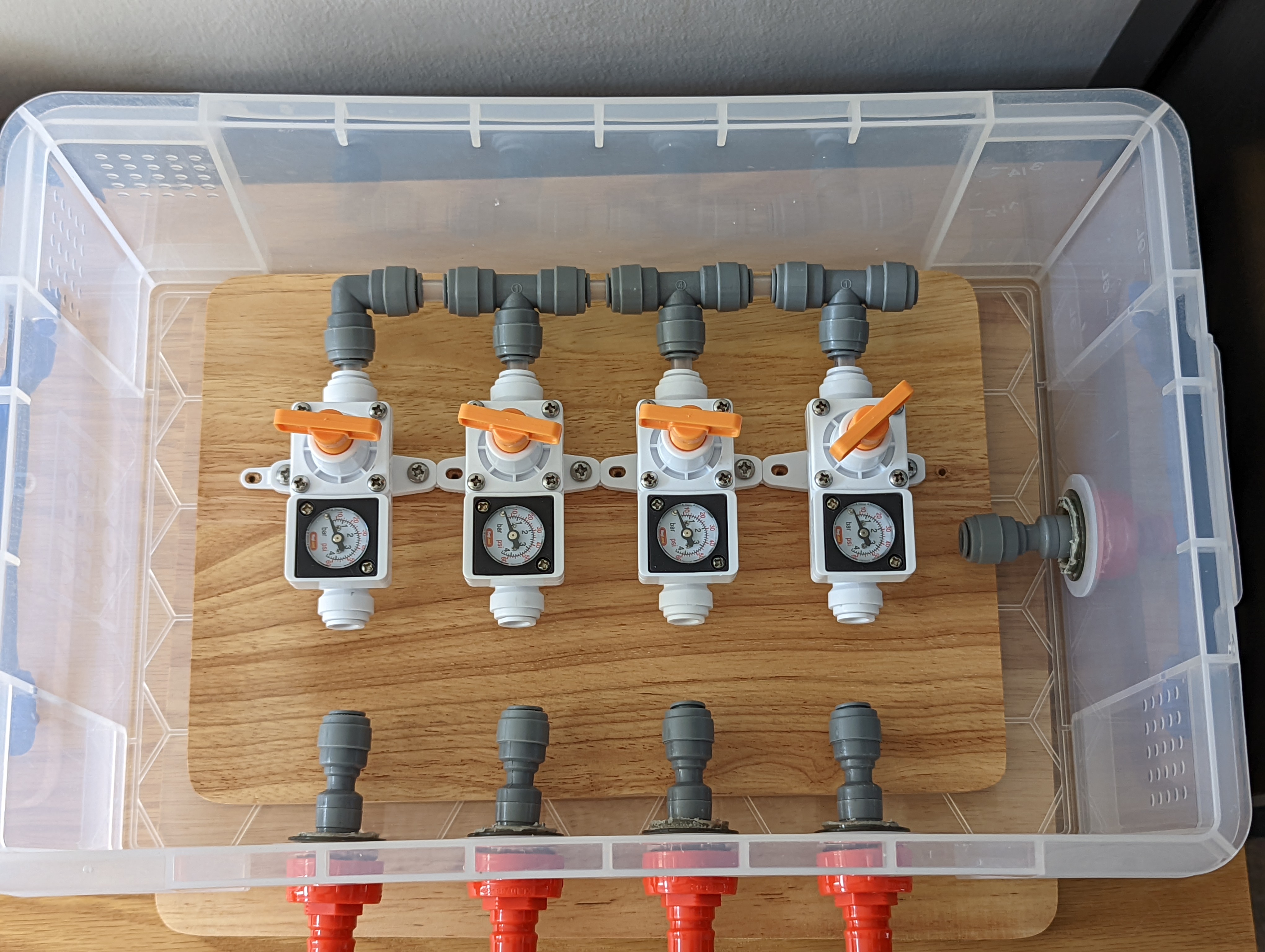
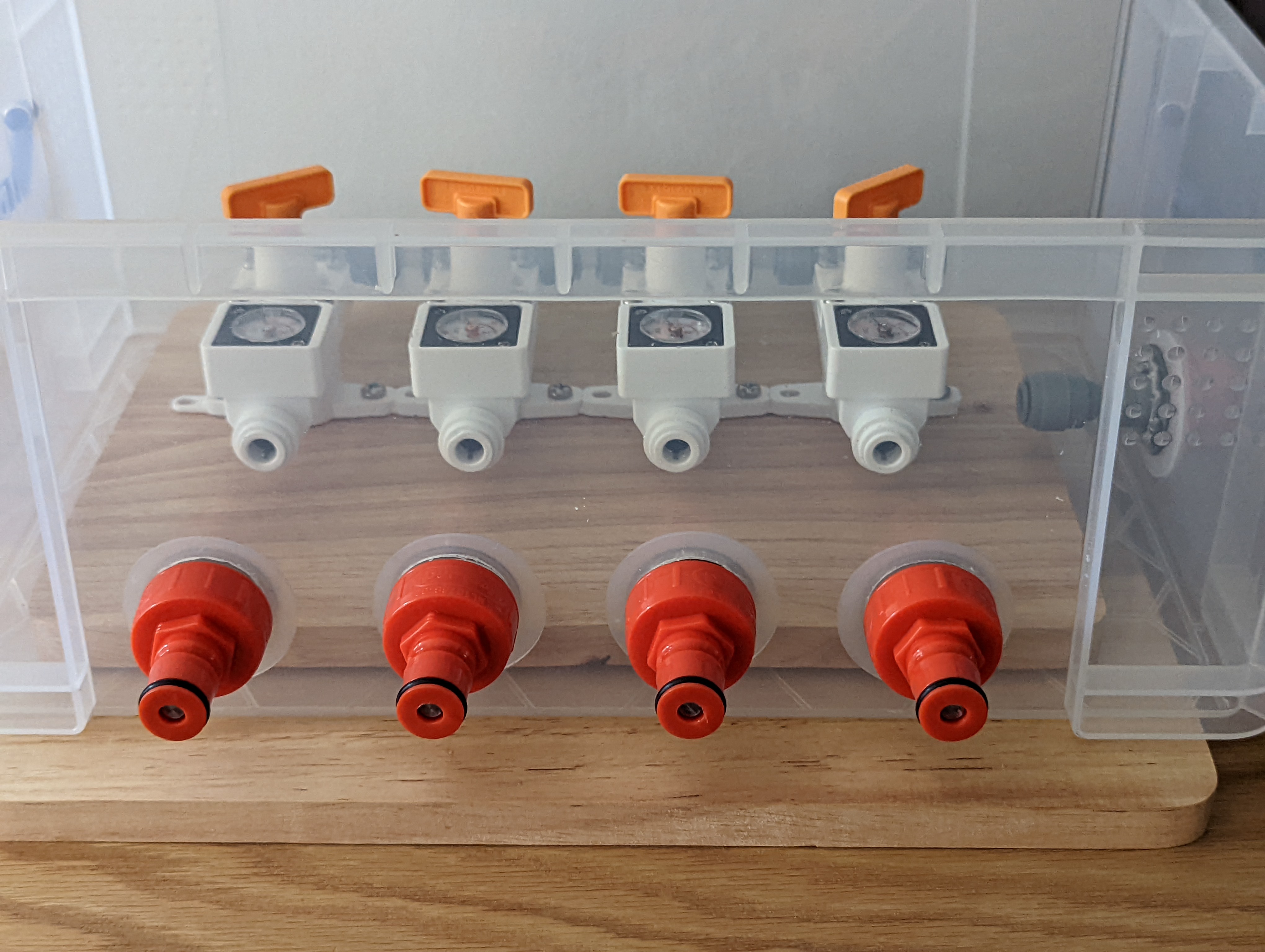
I cut a new hole for the gas inlet on the same side as the outlets, though due to the tapered sides of the box it needed to be placed much higher up. With the addition of some 3/4" washers and the actual tubing, the box was complete:
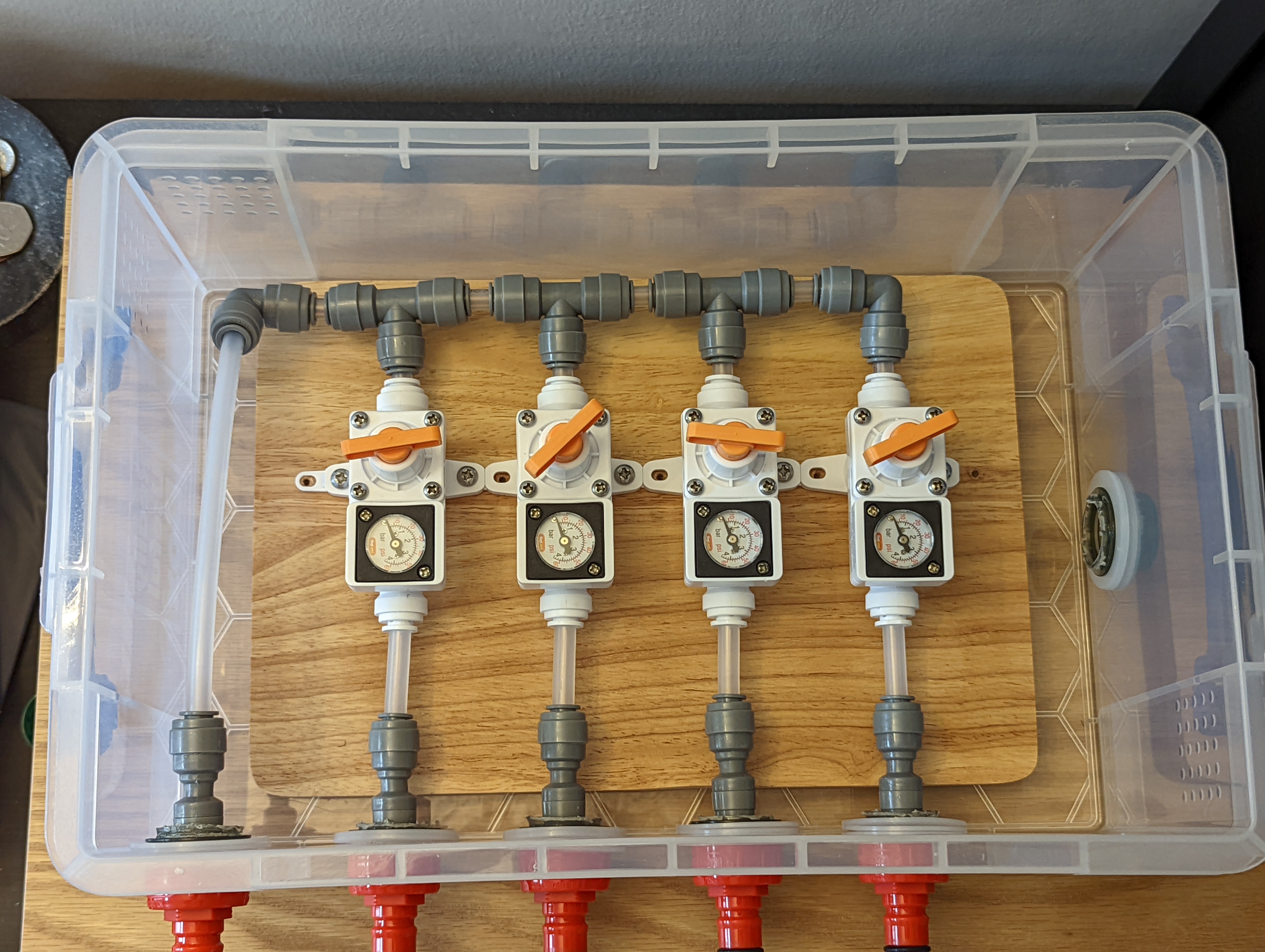
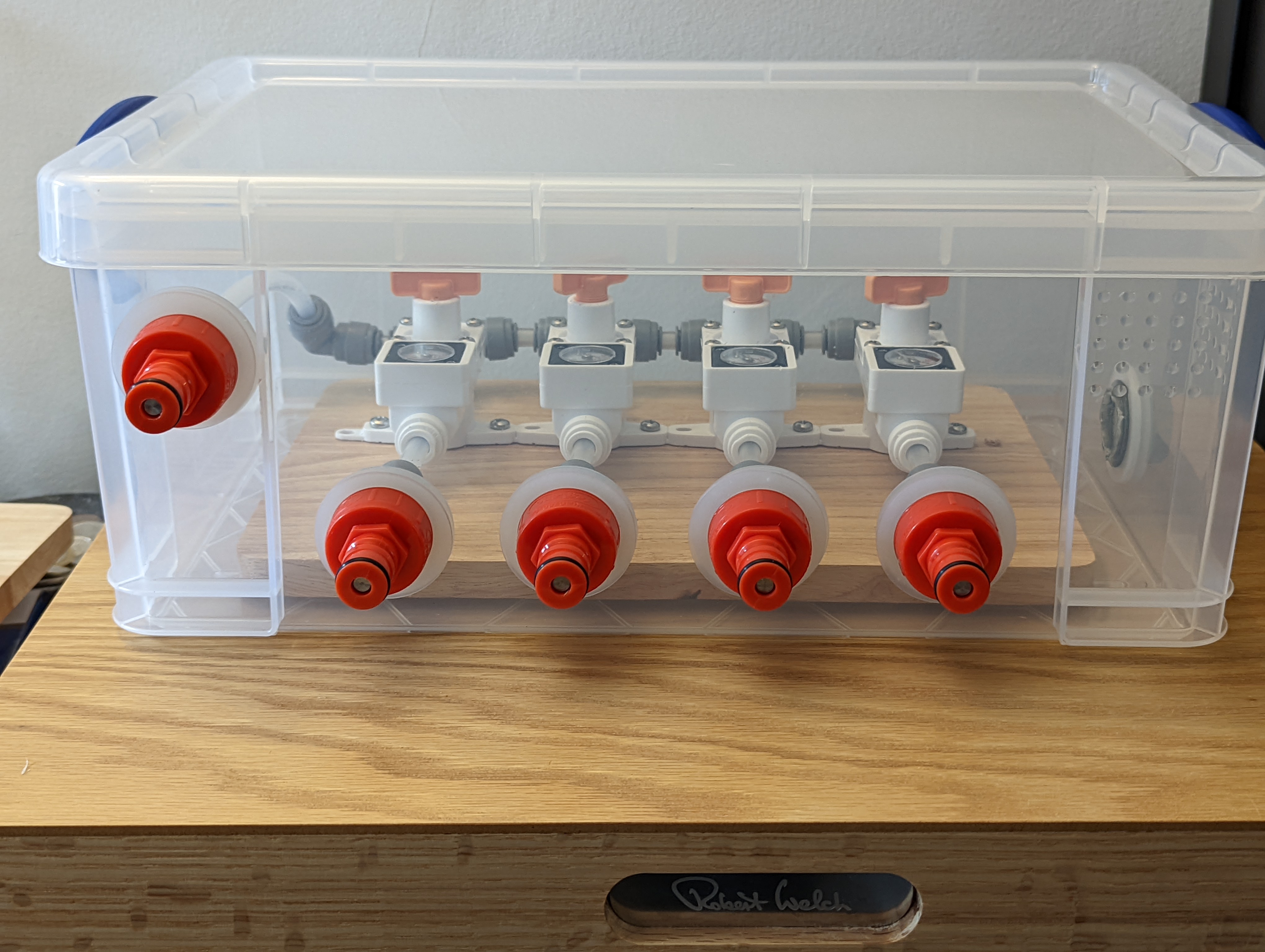
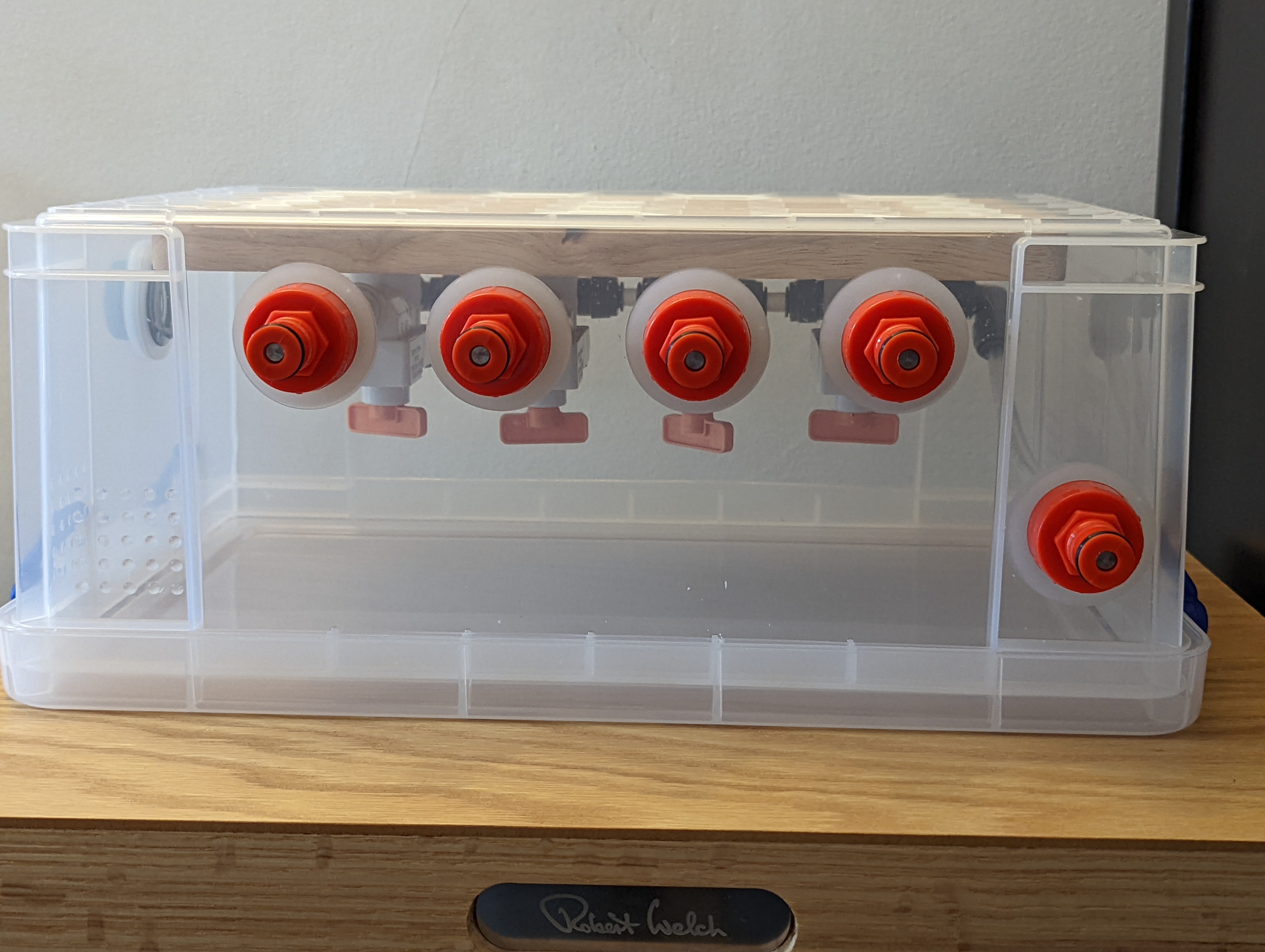
The only big mistake here was the bonus port on the side. In retrospect having the inlet on the same face as the outlets makes more sense, and having it higher up clearly distinguishes it from the outlets. Had I planned to organise things that way in the first place I would have placed a symmetric port on the right hand side of the face to make it look a little less janky, and maybe for use for daisy-chaining or as an unregulated outlet.
Making the tap lid
The tap lid has three tap shanks connected to carbonation caps on the top of a Really Useul 9L XL lid, using some 5/16" tubing and some Duotight connectors. Any regular tap can be connected to the shanks.
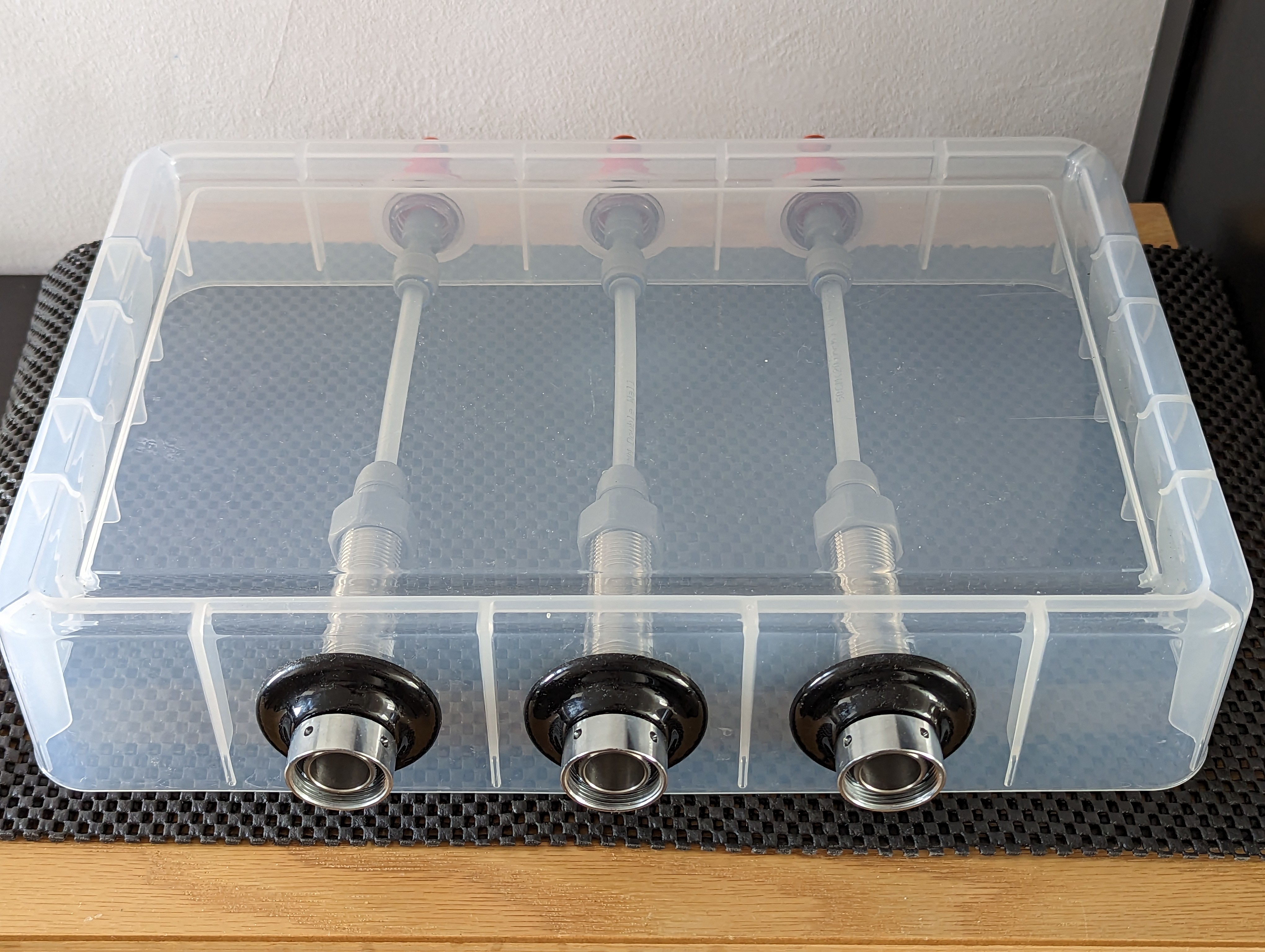
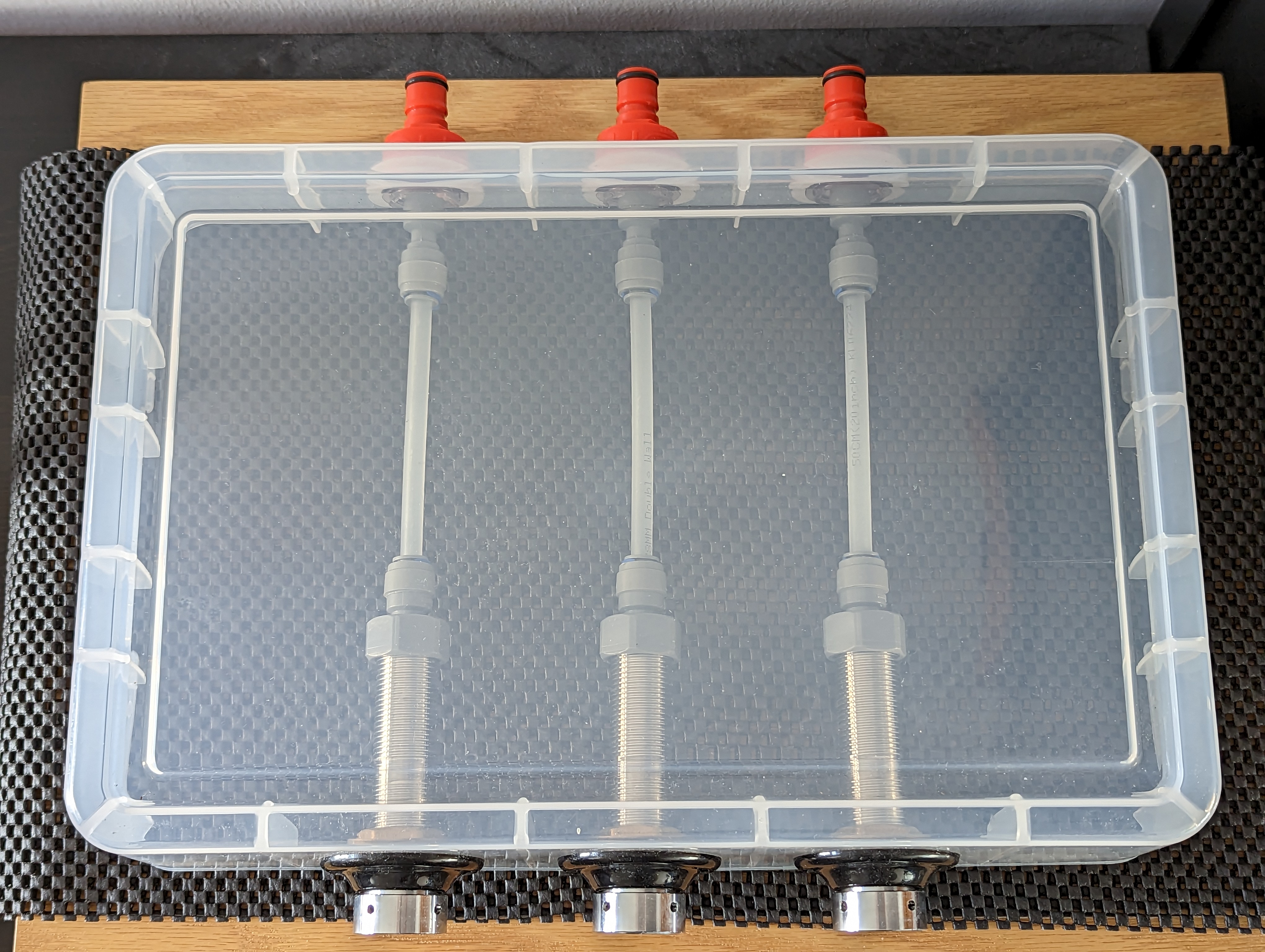
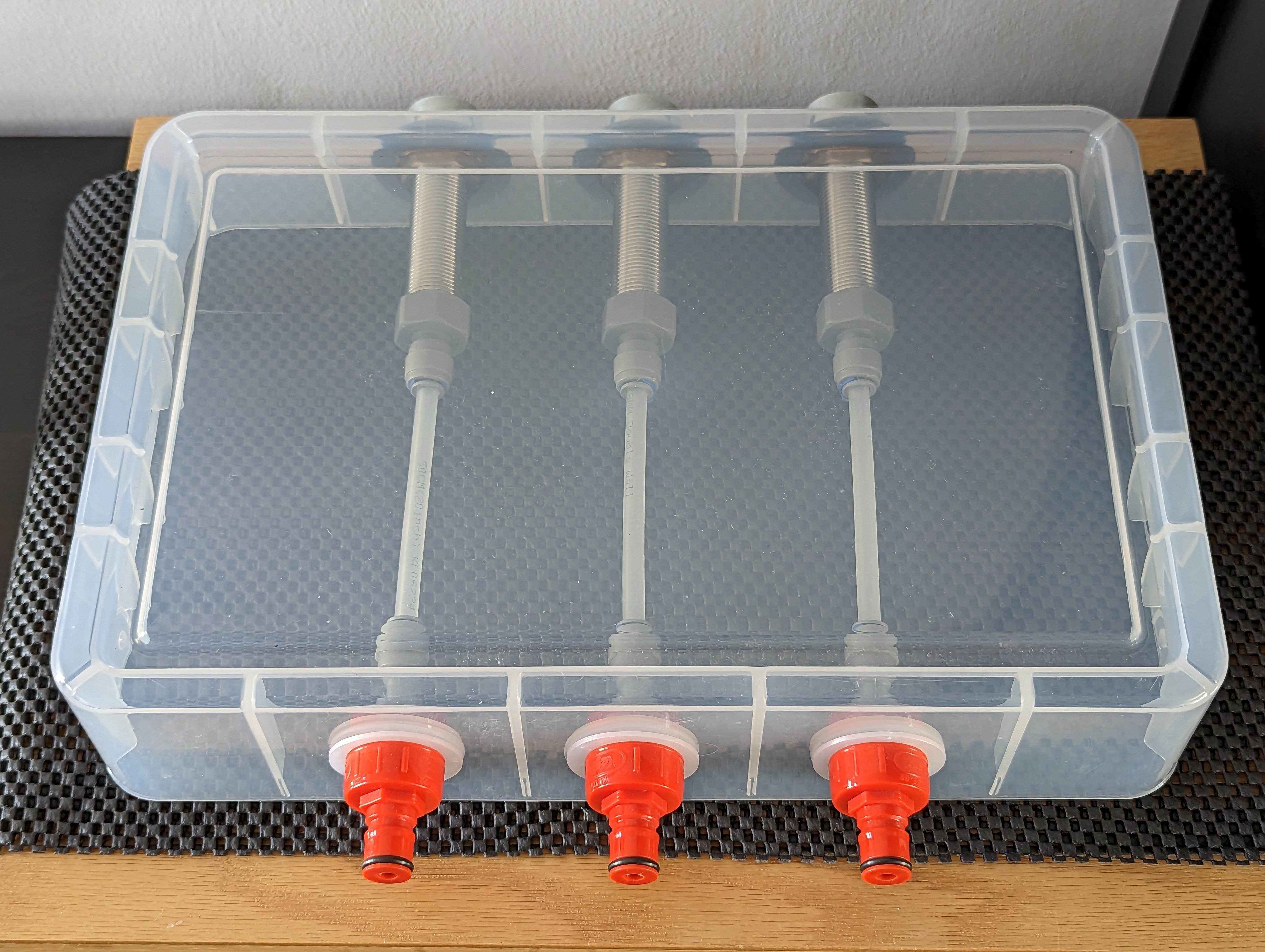
The lid has some internal ribs which neatly split the front and back faces into three main segments, which turned out to be a great guide. I marked the centre of each segment as where I'd drill holes for the tap shank and carbonation caps:
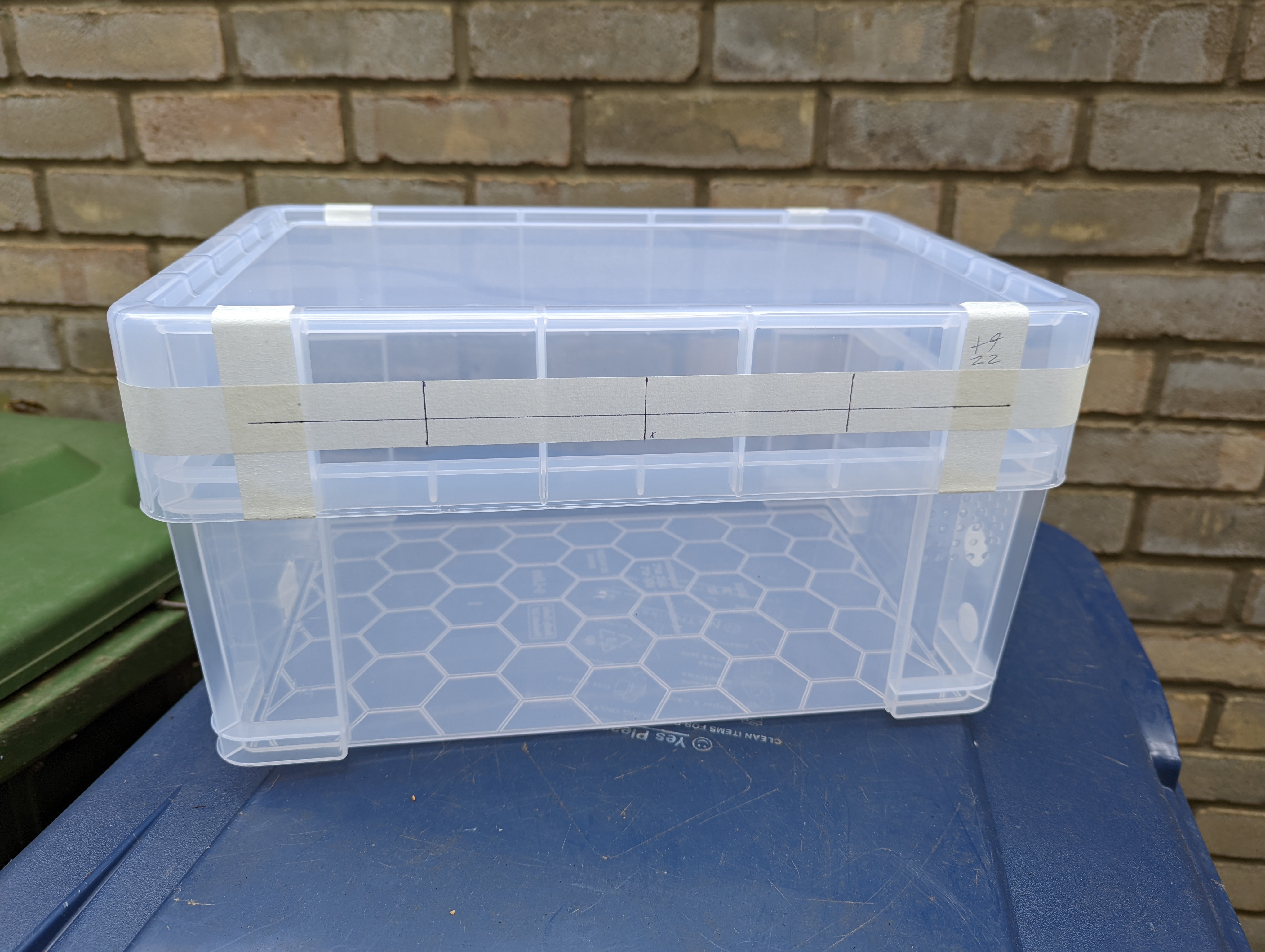
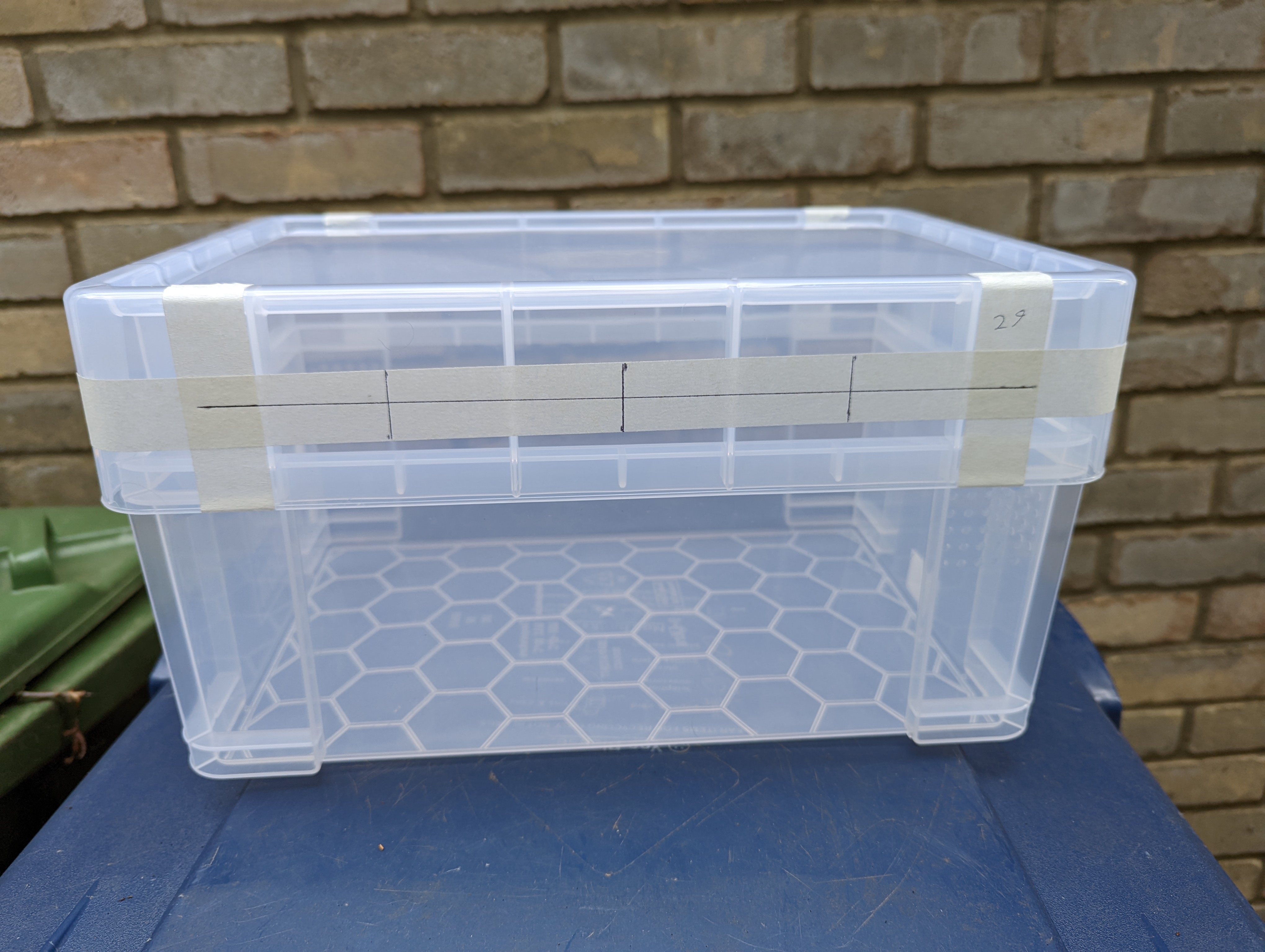
As with the regulator box, I used a 29mm diameter hole saw to cut the holes for the carbonation caps. The tap shanks are narrower, and I used a 22mm diameter hole saw to cut their holes:
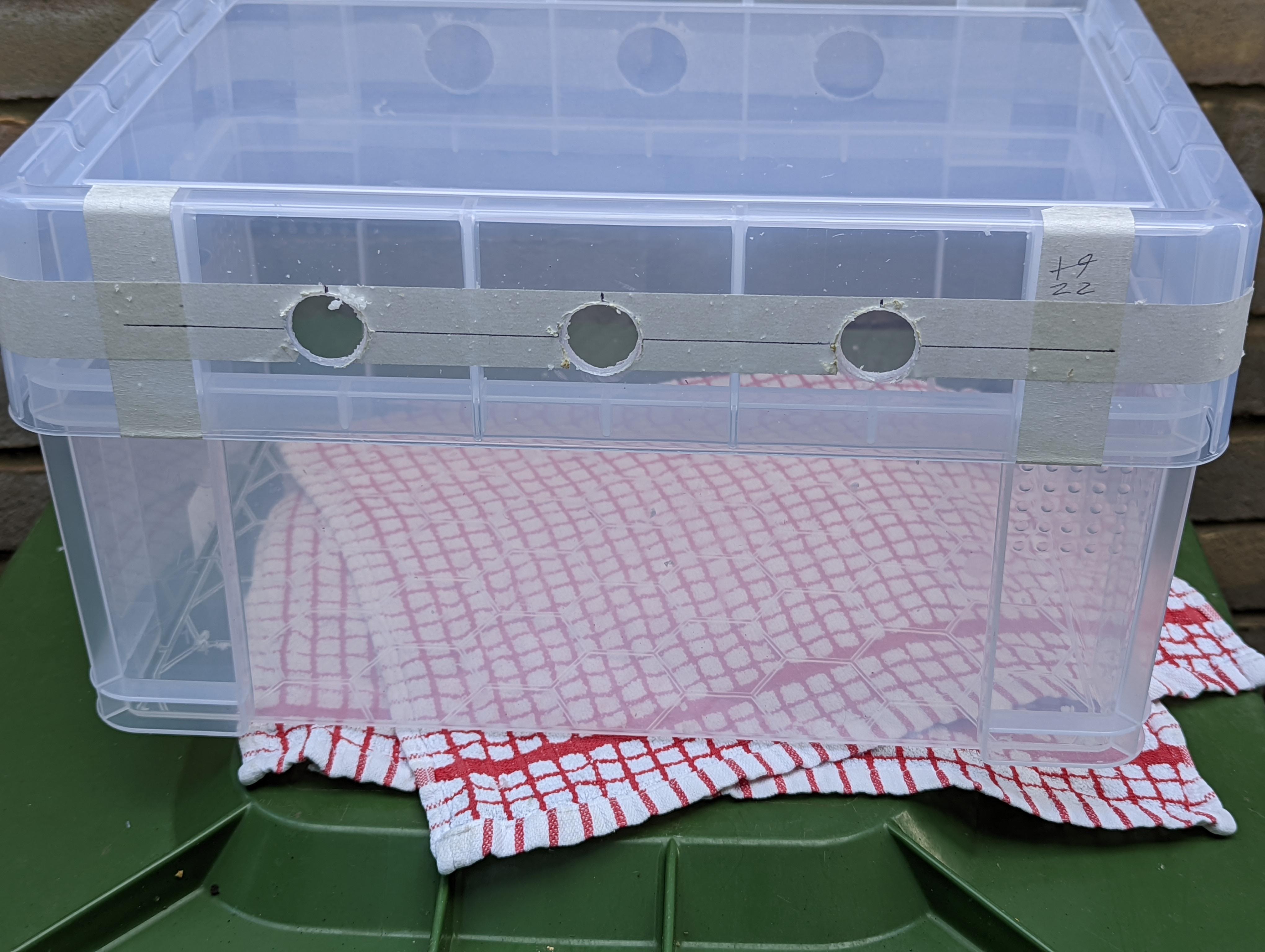
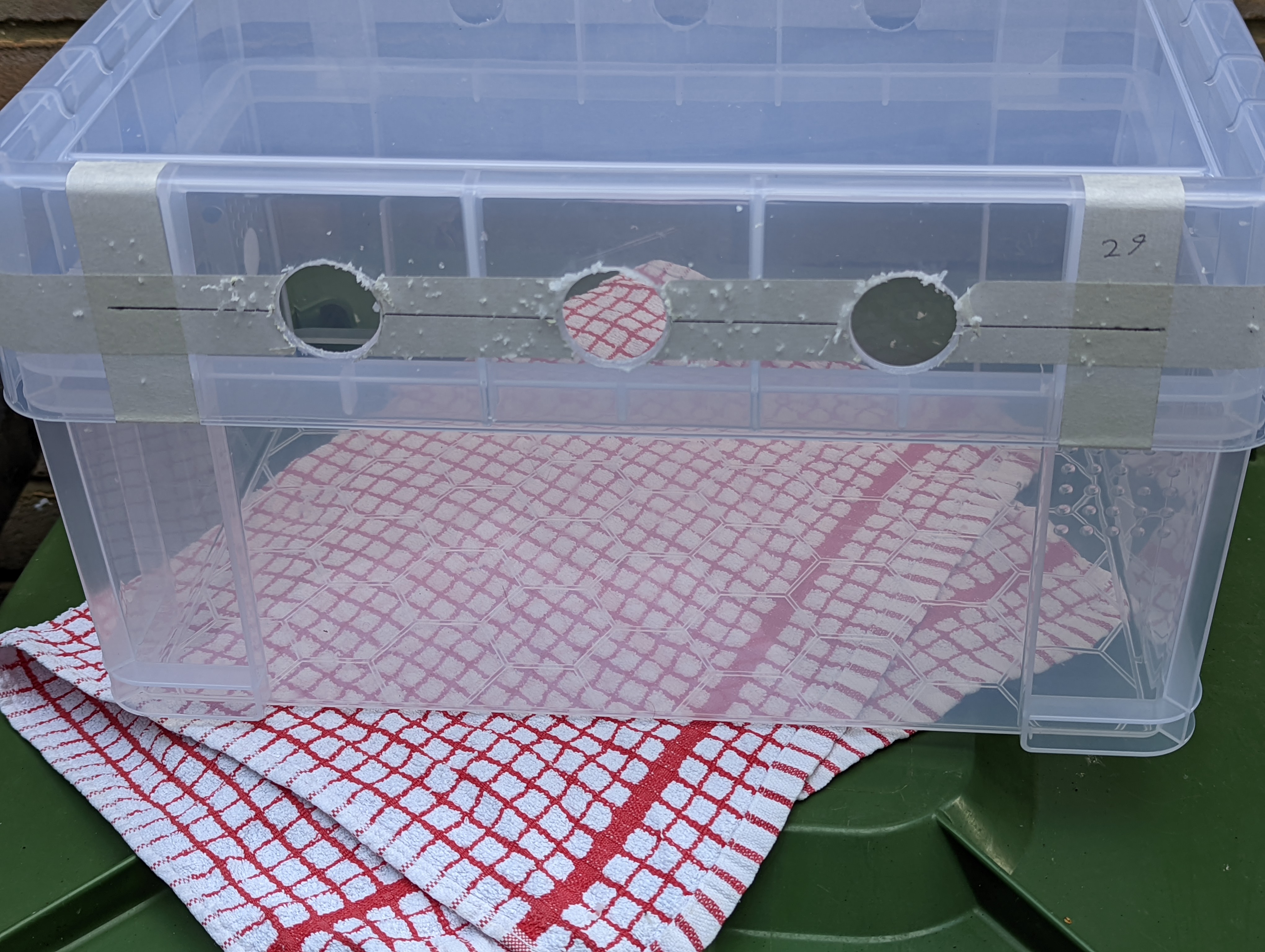
After deburring the holes, everything fit together in the same way as the regulator box. I used a few 3/4" washers to keep the carbonation caps snug, though I didn't need to do anything for the tap shanks. The tap lid fits neatly atop the regulator box:
Other bits and pieces
To go with the regulator box and the tap lid, I made some "jumper cables" with some 5/16" tubing and a ball-lock disconnect on either end. When not in use, these get stored in the regulator box, with spares and assecories (including the primary regulator) stored in a second box:
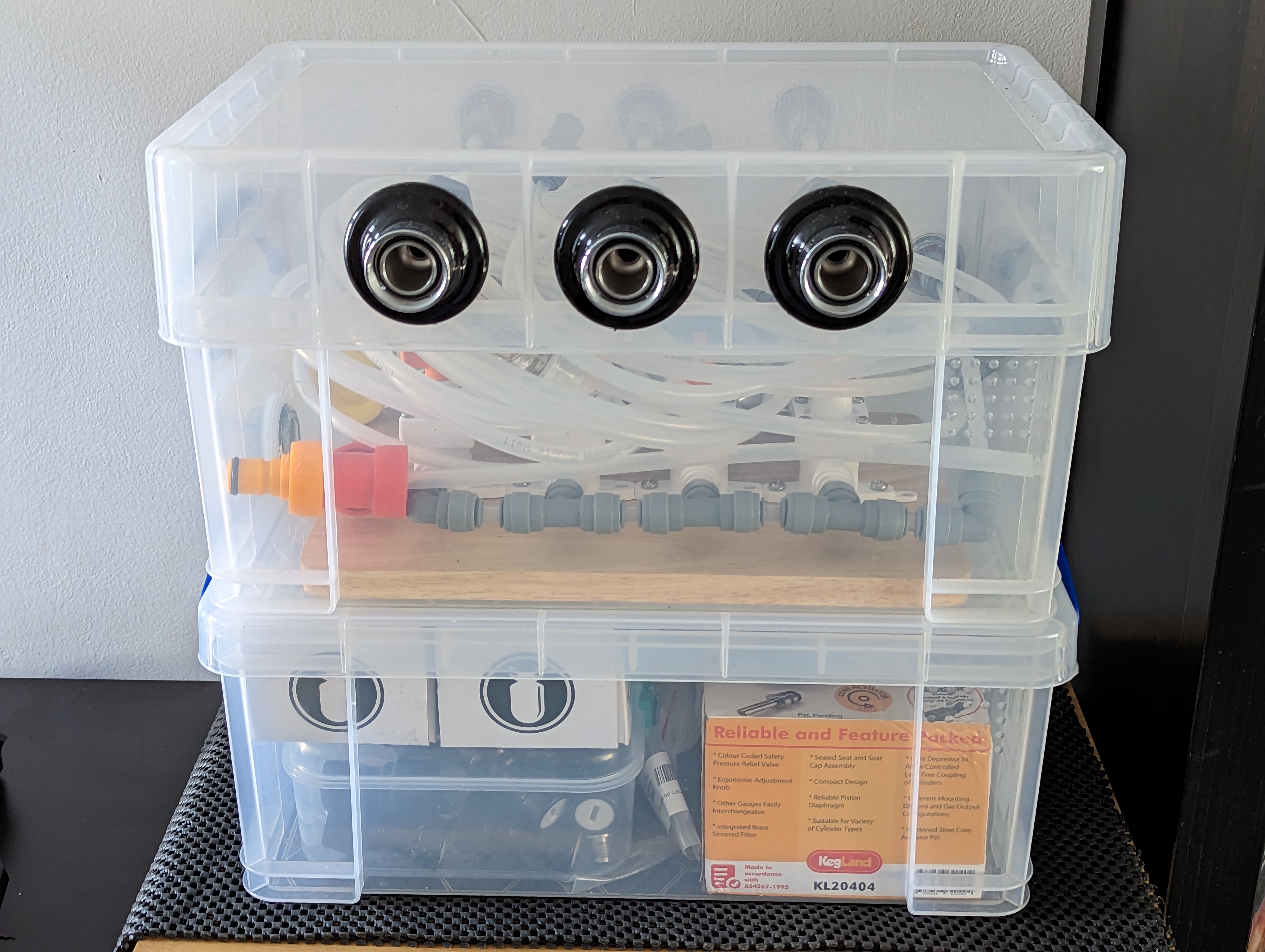
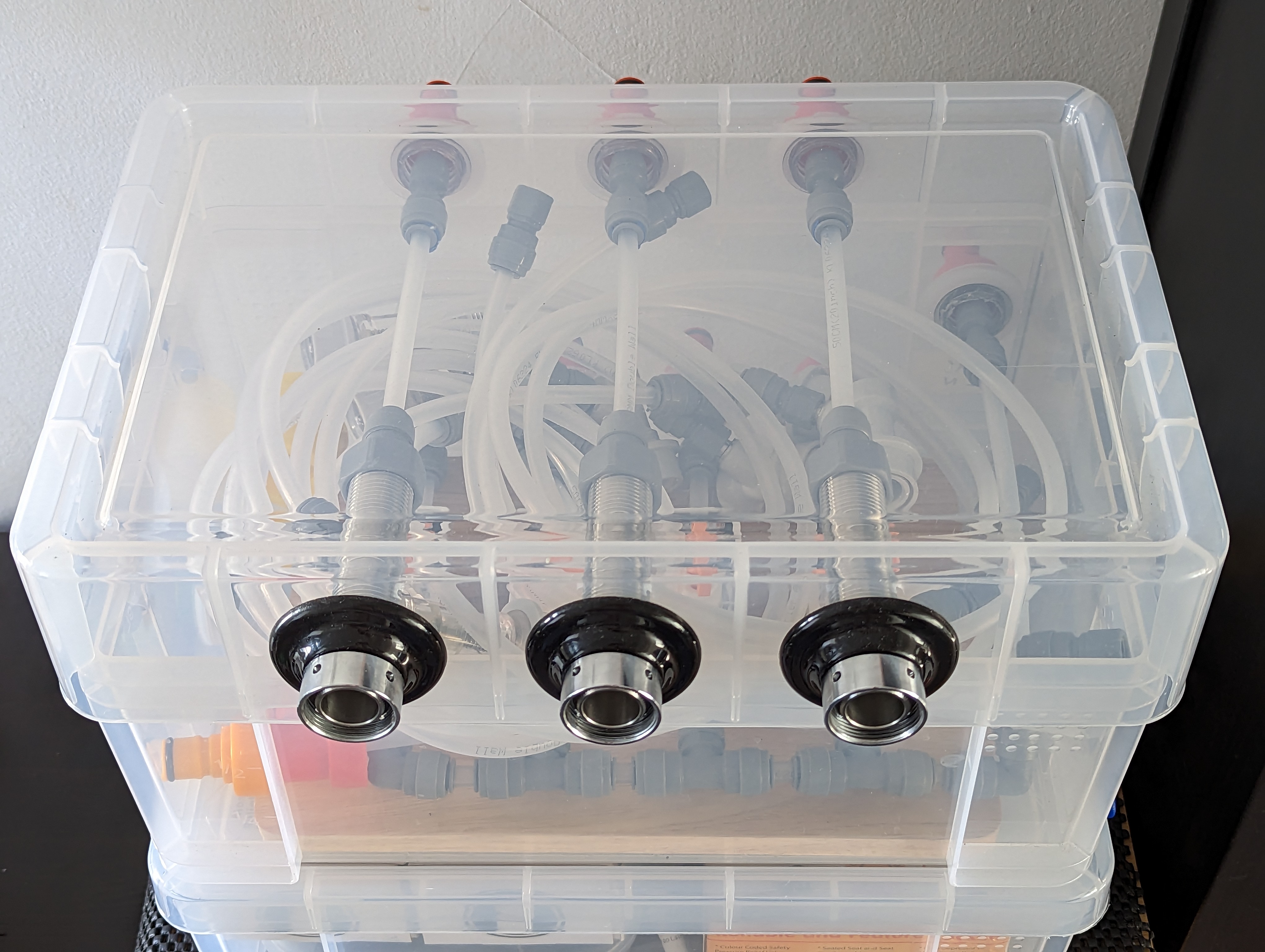
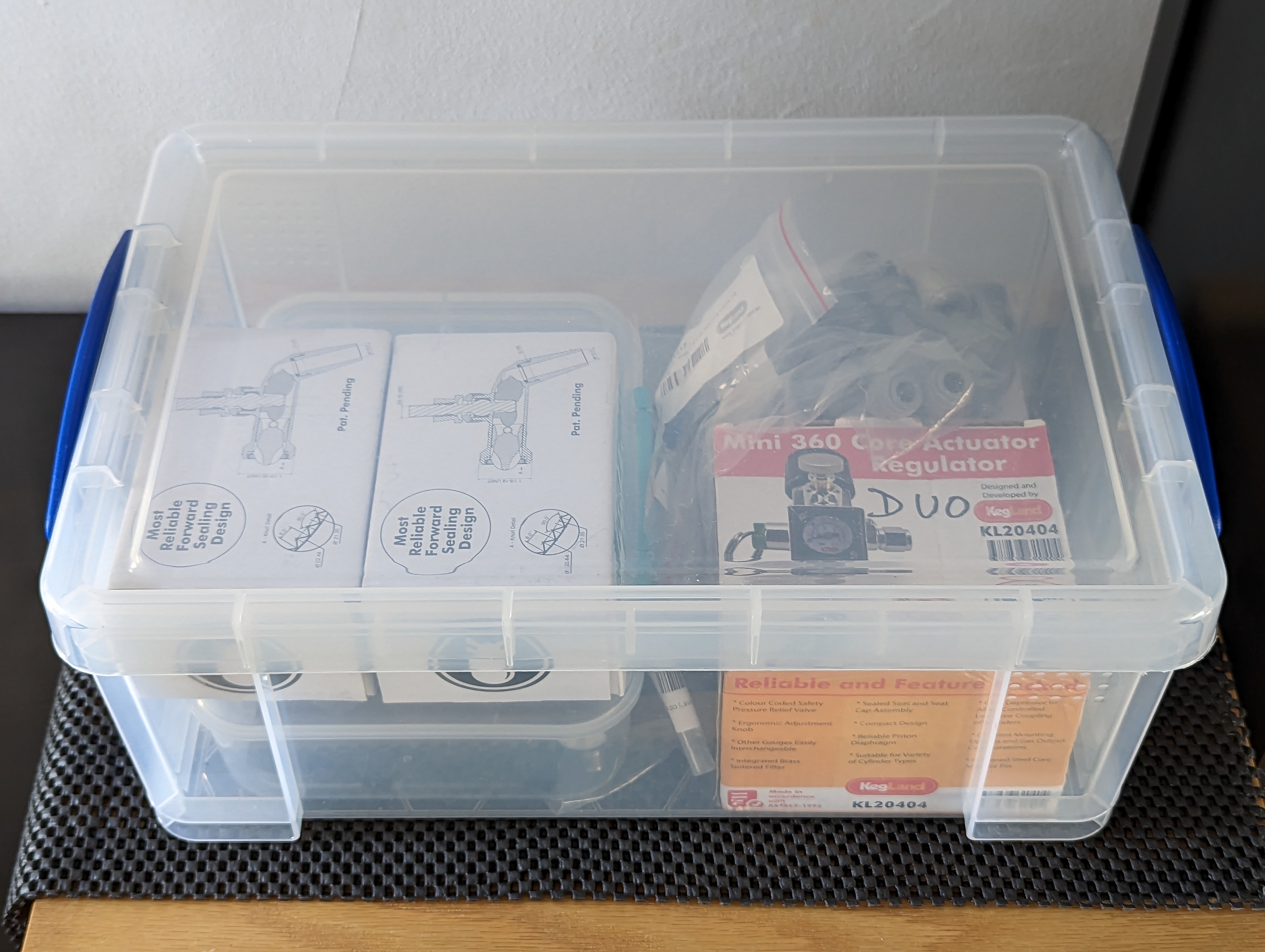
To bring the system to a party, pack the two boxes, some kegs, and a source of CO2. I use a SodaStream bottle that I can place in a backback: